Mentoring – How do you do it?

September 21, 2008

How do you mentor another engineer? As an example, the IEM has a mentoring scheme thats based around a logbook. The mentor meets up with the mentee at least once every 3 months, and reviews what the mentee has done. The mentor is meant to provide guidance as to whether the work done allows the engineer to develop.

When I go through a report, what I look for is:

  • Breadth of experience (I use the IChemE‘s report structure for this). The mentee should be exposed such as to develop her all her skills. This would mean the opportunity to explore as much as possible all engineering topics. Project management, safety, design, operations are just some of these.
  • Appreciation of engineering as a whole. A young engineer might think that running Hysys is cool, but you want them to understand why they are doing what they are doing. You don’t want to have only an technical software pilot, you do want an analysis as well. The tool is a means, not a ways.
  • Presentation of report. Engineers need to present their products. So clear writing skills and an proper flow is important. Highlighting important items and findings, and focusing on the deliverable would be something I would want to see.
  • General well-being. Is the mentee happy, is she getting enough support, is the mentor someone she wants to throw a brick at… you get the drift. The mentor should decide whether it is something she can help with, or the mentee should be able to deal with it herself with some tips of the trade.
  • Opportunity to influence exposure. You as a mentor should have enough clout to get  your mentee into projects or activities that help broaden their horizons.
  • Inspiration. It does help if you can get your mentee excited about work. Explain why they are doing the work that they do (need to build up experience, enhancing skills, exposure to client/site/software tools)

And you can do this more than once every three months, depending on the requirements. Engineers do get up and down days, you know.


HAZOP – How do you run a Review?

September 17, 2008

(continued)

I know the title used to be HAZID, but I though I would babble on about HAZOPs.

So, what do you need for HAZOPs? At a minimum, the P&IDs. Layouts might be useful. If you want to bring in design basis data, be my guest, though what usually happens is that the consultant process engineer or delegate retrieves the data from their offices during the breaks.

You need to prepare blank HAZOP sheets that will be filled up as the review continues. Wait, that’s old school. Nowadays you have a scribe who types out whatever the review team churns out. For a greenhorn, this is a stressful job. Apart from having your mistakes broadcast for all to see, you have to keep up with what the team says, understand technical terms, and sometimes perform editing as the review goes on. If the scribe has a strong personality, they might just take over from the official facilitator.

(continued)


Breaking into O&G Control Systems

September 16, 2008

I guess you might have heard of the Large Hadron Collider hacker break in. It made me wonder as to whether this can happen to offshore control and safety systems. Here’s my thoughts on the topic:

  • You need a doorway to hack into a system. Most (all that I’ve seen) offshore systems are standalone, and don’t have LAN, let alone Internet connections. Heck, for most of the DCS the only way you can transfer data is via 3.5″ disk (or was that 5.25″?). No USB ports, no CD drive. Maybe an RS-232 port, but you have to be on site to break in.
  • If there is a web interface, you can be pretty sure that the PC acting as a gateway has the usual bells and whistles to prevent unauthorized entry. This assumes that the link allows two way communication.
  • Even if you found a door, the architecture of a DCS is pretty specialised. Those who have hacked Windows, Macs, Linux systems will find their knowledge useless here. You won’t find published available APIs, object structures, weak kinks in the software, even a typical programming language. It’s all process loops, logic controls, and stuff. There’s no need to support third party development because, well there is no third party.
  • You might just get into the DCS, but the worst you can do is shutdown the platform. All the safety stuff is handle by the safety systems, which have triple redundancy, programmed PLCs, etc. I’d like to see someone hack remotely into that.

BTW, the above comments are based on my own limited knowledge of DCS / Safety system setups. There’s someone out there who can correct me.

My version of security? You have to reach 10,000 points in a Tetris game before you get access to the guts of the machine.


Saturday Star 2008-09-13 – Job Opportunities

September 15, 2008

Another week, another scan of the Saturday Star newspaper. Here’s a list of job ads in the paper:

  • I see Murphy Oil is looking for a senior production surveillance installation engineer, and senior installation support engineer. CVs to be submitted here. Someone once told me, if you every quit Murphy, you can never come back again. Some one told me the same thing about ExxonMobil as well, I can tell you for a fact that they aren’t making good that promise.
  • QP is looking for a lot of people (full page ad). You can visit the QP website. Did I tell you that QP’s SWB (salary, wages, benefits) package is something to be sneezed at?
  • Petrofac is looking for people. Unlike the last advert, these are for KL positions. Need 10+ years relevant exp. Apply here with full details.
  • Here’s a strange one. “Offshore/onshore safety trainers required. We are the “Trainer of Choice” … Please fax your resume to … Sharina at 03-2693 6915 …” Someone please contact this person and tell me what drops out.
  • Lloyd’s Register Technical Services is looking for an Inspection Engineer. Apply here with full details.
  • Saudi Basic Industries Corporation (Sabic) is looking for a process and a production engineer. You can apply via email here. 

What to Bring Offshore

September 14, 2008

I have a team of people going offshore soon. What should they bring offshore along with them, to make their stay more comfortable? What don’t they need to bring, and will be supplied by the onsite catering crew?

  • Toiletries – at least bring a toothbrush and toothpaste. Soap is supplied offshore, but maybe you want to bring your own stuff. If you travel offshore by chopper, there’s none of this ‘put liquids in plastic bag and not more than 500g’ restriction. Also consider if you want to use the towels provided, or bring your own.
  • Telephone services – If you ask the radio operator or OIM (offshore installation manager) politely, you can use the commercial line to get in touch with the office or home (BTW, you might want to give the commercial line number to your family and office so that you are more contactable). Other platforms have a call rota at night, 5 minutes per person to call anywhere you want (I do mean anywhere). An additional service provided at EMEPMI assets is that some phones have been set up such that you can use the iTalk service to call home. Bring a prepaid card.
  • Slippers/Flip flops – Bring a set, as you are not allowed to where your dirty, heavy, manly working boots in the living quarters.
  • Multiport adaptor – If you are bring electronic items offshore, you might want to use one of these to maximise the use of the limited number of free power sockets.
  • Ladies – bring your own items. Note that sleeping quarters are not locked, so expect cleaning staff to barge in at all times.
  • Pens and paper – I usually bring more pens then I need. Pens have a nasty habit of either slipping out of my pockets unnoticed, or waving bye-bye before they slip out and fall through decking into the sea. Is ink toxic? Same goes for paper, a difficult commodity to find offshore. Strangely enough, photocopy machines are a rare breed as well.
  • Cellphones – Some airports (Kerteh) don’t allow you to take your phone offshore. Park it with the friendly man who runs a handphone deposit service there. Other assets (Talisman) allow you take it with you, though they disembowel the thing (remove the batteries) before allowing you to get on board the chopper flight.
  • Ciggies – no sundry shop offshore. Bring your own.

Have fun.

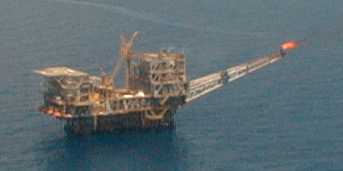
Central Processing Platform, offshore Terengganu, Malaysia

Central Processing Platform, offshore Terengganu, Malaysia


HAZID – How do you run a Review?

September 12, 2008

I’ve facilitated HAZOP (Hazard and Operability) reviews before, but never a HAZID (Hazard Identification) review. In fact, I’ve never attended one as well. Anyone know how the process goes?

For HAZOPs, here’s an outline of the review steps:

  • Break up the process (note that it is process based) up into nodes, allowing an easier analysis of the process. Implicit is that the system is assumed to be reductionist, i.e. the sum is made of the parts.
  • How big should a section be, you ask? Well, each process equipment is a good start. Make sure you define the boundaries properly, such that all process deviations are logically covered. For example, you might want to lump the isolation and control valves of a vessel into the vessel node, rather that with upstream or downstream equipment. If you were really pedantic, you might want nodes as small as a single line…

(to be continued)


ExxonMobil – Instep MOU

September 11, 2008

Signing of MoU between EMEPMI and INSTEP

On September 3, 2008, EMEPMI signed an MOU with the PETRONAS Institute of
Petroleum Technology (INSTEP) to develop a technician training curriculum
for Upstream Production Operations.

Zan Noor Ismail, Operations Manager, signed on behalf of EMEPMI while
Khairul Azman Yasin, PETRONAS Management Training Berhad CEO, signed on
behalf on INSTEP. Grace Choo, EMEPMI SHE Manager and M. Sazali Salim,
INSTEP General Manager witnessed the signing.

Since 2002, EMEPMI has been utilizing INSTEP facilities to train field
technicians. The MOU will expand this relationship for the benefit of
both parties as follows:

  • INSTEP will gain access to proven training curriculum developed from
    ExxonMobil’s worldwide vendor pool and calibrated against ExxoMobil
    global standards.
  • EMEPMI will be able to leverage on INSTEP as a proven training
    facility and training provider to help rebuild competency levels in
    the current workforce as well as for training of new trainee intakes.

The signing of the MOU marks another milestone in the ExxonMobil and
PETROANS partnership. The training curriculum developed through this
partnership will contribute towards building a competent local workforce
not only for ExxonMobil but also for the Upstream Oil & Gas Industry in
Malaysia.

Ceremony Signing EMEPMI INSTEP MOU

Ceremony Signing EMEPMI INSTEP MOU

 (I thought EMEPMI had been sending technicians to be trained at INSTEP for a looooong time already.)


Metering – Perils of Measurement by Difference

September 9, 2008

There are two accepted ways of performing allocation metering here in Malaysia:

  1. direct measurement – what you meter (at an approved metering station) is what you get (WYMISWYG, kinda like WYSIWYG). You honour the product metered.
  2. measurement by difference – You take the furthest downstream meter, subtract all the upstream flows metered by approved meter stations, and the difference is assigned to the unmetered production source.

Kinda obvious that if the downstream meter is negatively biased (undermetering) and the upstream meters are positively biased, the production allocated to the ‘difference source’ will be less than actual.

Throw in the situation that each source might have a different production sharing contract (PSC), different partners and percentage interest, and the calculations as to how much you loose (or gain) can get pretty wild.

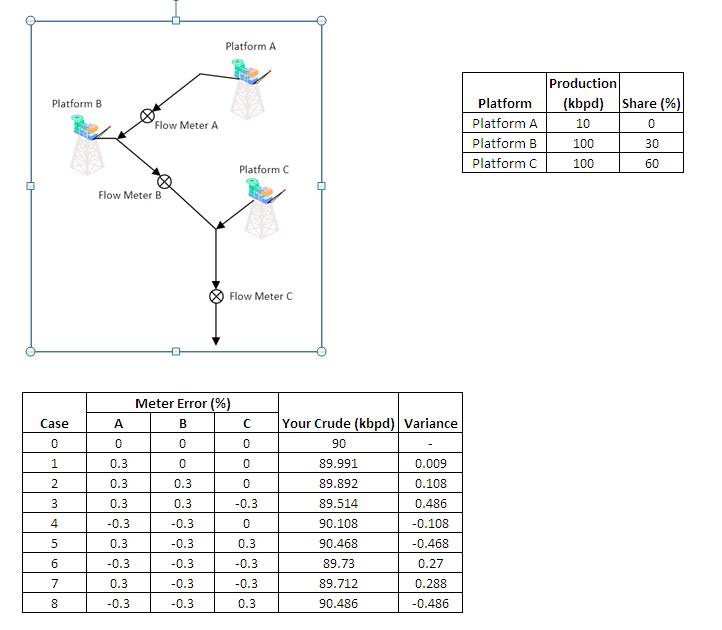
Here’s one example I’ve attached (credit goes to an associate for crunching the numbers). What I would like to note is that, even if you have no share in Platform A production, the performance of their metering station affects your crude entitlement. So, a meter you might not have access to (why should you, you don’t own a drop of oil metered through station A), affects your dollars and sense.


Measurement by Difference

Example: Measurement by Difference


Saturday Star 2008-09-06 – Job Opportunities

September 8, 2008

Sorry for skipping a week. I was out of town. My next few post will have some photos I took on my trip.

Another week, another scan of the Saturday Star newspaper. Here’s a list of job ads in the paper:

  • Optimal is looking for a Kerteh-based Chemist. Emailand web presence available. A lot of people moved to Optimal when it first started up, though I think the renumeration package isn’t as good nowadays. However, it’s still better than PETRONAS because Dow Chemicals is running interference.
  • ExxonMobil is looking for a safe/ risk engineer. Submit CVs by 20th Sept, 2008 at the local web page.
  • Saudi Basic Industries Corporation (Sabic) is looking for a senior project, process control, process consultant and senior safety engineer. There is  a walk in interview on the 18th to 22nd October, 2008 (tempting, tempting) at the JW Marriot, between 0900 to 1700. You can apply via email here. 
  • MISC has some positions, though with the recent hijackings, they might expect a drop of takers.
  • Shell is looking for some downhole people and well people: Offshore Completion and Intervention Supervisor, Offshore Drilling Supervisor, Well Completion Design Engineer, Well Eng, Well Opns Eng.  Head to their website and follow Professionals & Apply → Job Search → Region → Asia. Closing date’s Sept 21st, so run to your nearest netbook.


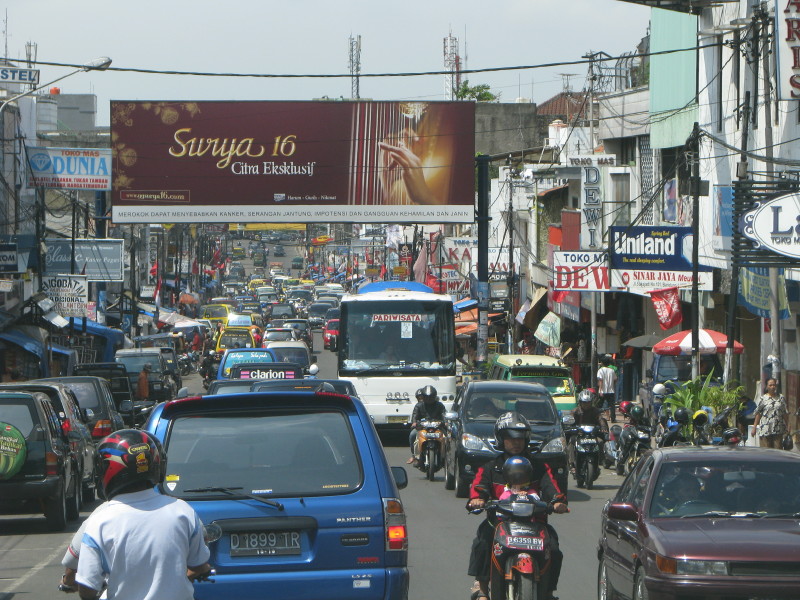
Jalan Sukajadi, Bandung, Indonesia

Jalan Sukajadi, Bandung, Indonesia


Engineering Hunting Packs

September 5, 2008

While I visited a engineering oil and gas company in Indonesia, I came across a novel concept: engineering packs.

It works like this: you have a group of young engineers tackle one activity at a time. Note that I refer to one project, one activity, like doing a line list, or filling out datasheets, or entering data into a database. The pack acts a group collective, each having partial knowledge of the topic. Together, they check and counter check their work.

The disadvantage about this approach is that initially you pay double or triple a young grad’s salary, as they act as one. However:

  • less checking of work by seniors (have packs in an assembly line, one checking the work of the other)
  • more incentive to learn fast (break from the pack, become alpha leader)
  • spreading technical knowledge faster (hopefully, each pack member wants to impress the other in terms of what they know, less threatened to bring out their ideas).

Could this concept work in Malaysia?