In all industries, you require your equipment to be designed ergonomically, so that there is:
- less physical stress on the operator.
- less chance of the operator not operating a critical equipment because he can’t find it or it’s too difficult to reach.
- less chance of the operator swearing at engineers, and saying that we design equipment for 5 foot tall blokes with 4 foot arms.
Now, the same principle applies to consumer interfaces. What do you think of this example, where the photo was taken at eye level:
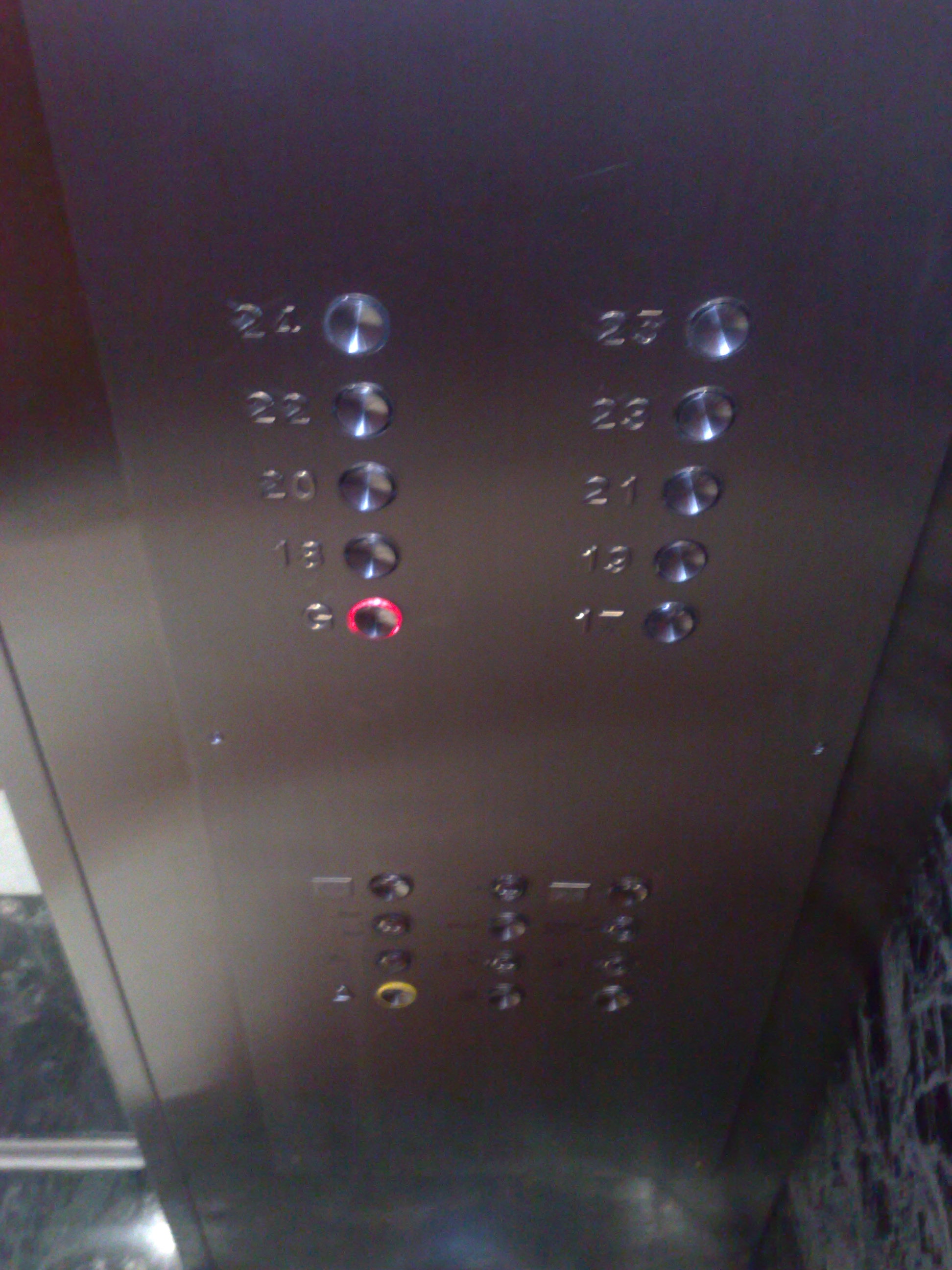
Elevator Menara Public Bank
All polished metal, labels bending into the wall… you have to go down to figure out which one the ‘close door’ button is.
Please don’t employ this company to do your DCS interfaces, SOGE can inject some common sense



there is a PTS/DEP which addresses ergonomics. i wonder whether the twin tower design is in line with the PTS?
i like twin tower elevators. the best i’ve ever experienced so far.
io: I don’t agree. The ‘next elevator’ indicator lights, though stylish and 1970’s don’t do their primary task well, which is to indicate which elevator will next whisk you up. The indicator light blends in too well with the existing backlight.
How is lift ergonomics in your part of the world?
Human factor. Not the users but the architect/ designers: they’re short peeps.
anyone noticed the emergency button in klcc lift, if you are standing on the left side and try to hold the door for someone, chances of you pressing the emengency button is high as it they uses the same panel as the right side.
for those that been to ExxonMobil office in Jakarta, that’s the GKBI building, the lifts are great.
I found the lift at Energy Building in Jakarta is good. Floor button is placed in the lobby itself and can’t figure it out until the guard give me the instruction.
Salleh, that’s where HESS is.
Yes, visit them last month