IEM Shout Out – 2017-07 One-Day Course on One Day Transforming Presentation Skills Workshop for Engineers Using NLP

July 13, 2017

My technical division will be hosting a 1 day  course on the 27th July, 2017. It is worth 7 CPD points, and held at Wisma IEM. The course will be presented by Ir. Elias Musa.

This one day workshop will prepare you to communicate effectively and persuasively and be comfortable with your own style. Develop key presentation skill and learn how to present your ideas with conviction, control, and poise and without fear. Learn how to deliver with energy and keep the audience engaged. Best of all, you’ll gain confidence by making presentations.

Ir. Elias Musa earned a Bachelor of Engineering degree in Chemical Engineering in 1977 with Master Science and MBA, and has over 30 years of experience in plant /facilities project development in Oil & Gas Industry, including offshore and onshore production facilities, pipeline and gas processing plant GPP and LNG in Malaysia and Overseas. He has worked for clients as well as International design consultants. He is a certified Master Practitioner of NLP.

Register here, or download the form here.


IEM Shout Out – 2017-08 Precision Engineering For Higher Value-Added Industrial Products

July 5, 2017

My technical division will be hosting a half day seminar on the 5th August, 2017. It is worth 3 CPD points, and held at Wisma IEM. The course will be presented by Professor R. C. T. Lee.

In this seminar, we shall first emphasize the importance of industry to economy of a nation.  We will then point out that Taiwan is facing tough challenging from China and we must upgrade our industry to the “precision industry”.  By precision industry, we mean products in such an industry are of high specification.   In other words, ordinary turn key industries will not survive in Taiwan at all.  But, to reach the sophisticated state, we must build a solid foundation on basic industrial technologies.  These technologies include mixing and dispersing, separation and purification, machine design, electronic circuit design, material science, grinding technology, soldering technology, software, control and so on.  We will present many cases to show how these basic industrial technologies help us produce industrial products with high added values.

Professor R. C. T. Lee obtained his B. S. degree in electrical engineering from the National Taiwan University in 1961, M. S, degree in electrical engineering from University of California at Berkeley in 1963 and Ph.D. degree in electrical engineering and computer science, also from U. C. Berkeley in 1967.  He worked in National Institutes of Health and Naval Research Laboratory in U.S.A. from 1967 to 1975. He returned to Taiwan in 1975 and was appointed a professor in the National Tsing Hua University.  Later, he was the President of Providence University as well as the President of National Chi-nan University.  Professor Lee formally retired in 2007.  Then he served as a senior adviser of the President for seven years.  He managed to persuade the Taiwanese government to pay attention to the basic industrial technologies, founded the Taiwan Society for Precision Engineering in 2014 and served as the chairman of the society for two years.

Register here, or download the form here.


IEM – Chemical Engineering Design Competition 2017

July 3, 2017

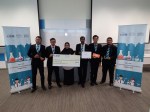
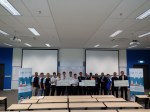
I was privileged  to be a judge as this event. Will you be entering next year?


IEM Shout Out – 2017-07 Talk On Implementation of conceive-design-implement-operate (CDIO TM) framework for Chemical Engineering challenges

June 29, 2017

My technical division will be hosting a talk on the 26th July, 2017. It is worth 2 CPD points, and held at Wisma IEM. The talk will be presented by Ir. Dr. Chong.

The conceive – design – implement – operate (CDIOTM) framework is implemented by educators to generate graduates, who are able to tackle complex engineering challenges. A set of 12 standards define this framework and how to implement it are useful for chemical engineers. Chemical engineers from the industry will be able to develop sustainable solutions using the structured framework. Several chemical engineering innovative projects are completed using the CDIOTM framework will be shared during the talk.

Medical Gas Piping System (MGPS) is required to deliver medical gasses supply to patients and surgical tools in hospitals. The medical gasses include oxygen, nitrous oxide, carbon dioxide, Entonox, medical vacuum, anesthetic gas scavenging system, medical and surgical air. Since the gasses are delivered direct to patients the quality and reliability of the system is very important to ensure the live of the patients and the safety of the facilities.

Ir. Dr. Chong obtained his BEng (Hons) Chemical Engineering (Universiti Teknologi Malaysia) in 2007 and  PhD in Engineering from University of Nottingham. He also is a Chartered Engineer in UK and a Professional Engineer of Board of Engineers, Malaysia. He received President Award of Excellent from IEM for four consecutive years from 2013 to 2016. He also bagged the prestigious Vice Chancellor’s Award as ‘Taylor’s Most Cited Academic 2015’. His scholarly activities encompass leading research projects, spearheading academic collaboration with leading academic institution both in Malaysia and in the world. In his brief academic career, he published more than 50  international journals, conferences papers, technical bulletin/proceedings and book chapters. He is one of the CDIOTM leaders in Asia Region. His academic research interest is in the area of drying technology, energy, health and engineering education.

Register here, or download the form here.


IEM Shout Out – 2017-07 One Day Course on Transforming Presentation Skills Workshop for Engineers Using NLP

June 27, 2017

My technical division will be hosting a 1 day  course on the 27th July, 2017. It is worth 7 CPD points, and held at Wisma IEM. The course will be presented by Ir. Elias Musa.

This one day workshop will prepare you to communicate effectively and persuasively and be comfortable with your own style. Develop key presentation skill and learn how to present your ideas with conviction, control, and poise and without fear. Learn how to deliver with energy and keep the audience engaged. Best of all, you’ll gain confidence by making presentations.

Ir. Elias Musa earned a Bachelor of Engineering degree in Chemical Engineering in 1977 with Master Science and MBA, and has over 30 years of experience in plant /facilities project development in Oil & Gas Industry, including offshore and onshore production facilities, pipeline and gas processing plant GPP and LNG in Malaysia and Overseas. He has worked for clients as well as International design consultants. He is a certified Master Practitioner of NLP.

Register here, or download the form here.


IEM Shout Out – 2017-04 2-Day Course on “Fundamental of Project Management for Chemical Engineers”

March 26, 2017

My technical division will be hosting a 2 day course on the 26th and 27th April, 2017. It is worth 13 CPD points, and held at Wisma IEM. The course will be presented by Ir. Elias Musa.

Synopsis

This practical course will provide the participants the required skills, tools, knowledge, attitude and the competencies needed to manage the design and the construction of a process plant or facilities.
• Introduction to Project Management for Chemical Engineers
• Overview of Plant Project and Basic Process Design Element for Chemical Engineers
• Planning Engineering Work, managing Schedule, Cost, Quality and Resource
• Coordinating Engineering Work and Conceptual Engineering Design
• Detail Engineering design, Invitation To Bid and Contract matters
• Project Management Organization, Progress Measurement and Reporting
• Procurement of Long Lead Items and Bulks
• Construction – Process Equipment, Piping, Instrumentation etc
• Pre-commissioning and Mechanical Acceptance, Commissioning and Initial Startup
• Project Handover and Warranty


Ir. Elias Musa earned a Bachelor of Engineering degree in Chemical Engineering in 1977, with MS and MBA as well as a certified Project management Professional with PMI (USA), and has over 30 years of experience in plant /facilities project development in Oil & Gas Industry, including offshore and onshore production facilities, pipeline and gas processing plant GPP and LNG. He has worked for clients as well as International design consultants.

Register here, or download the form here.


IEM Shout Out – Talk on HAZOP – A Practical Approach

January 12, 2017

My technical division will be hosting a talk on the 19th January, 2017 at 5:30pm. It is worth 2 CPD points, and held at Wisma IEM. Since I’m giving it, I expect hoards will have to be turned away at the gates. And it’s a big room, so I need to fill the seats.

A Hazard and Operability (HAZOP) study is a formal, systematic and detailed examination of new or existing facilities. It focuses on the process, rather than risks from ‘outside the pipe’, which are better analyzed using other studies such as HIREC/ HAZID/ HER. A HAZOP assesses the hazard potential, causes and consequences on a facility when there are deviations to the operating conditions, or the manner of operations. Existing safeguards need are reviewed to determine whether they can eliminate the cause or minimize the consequence.

Wata has 20 years of experience in the oil and gas industry, in both design and operations.

Register here, or download the form here.


Shout Out – Talk on “Trilogy of Rare Earth Elements”

September 17, 2016

This is a shout out for the IEM. My Technical Division will be  hosting a talk on the 1st October, 2016 by Professor Ka Kheng Tany. It’ll be at 9am   (makan-makan at 8:30), before the AGM

Deng Xiaoping famously said in 1992 that “The Middle East has oil. China has rare earths.” Following China’s reduction of the export of the critical raw materials in 2009, some countries tried to neutralize China’s 95 percent global supply of rare earths. The performance and fate of three rare-earth plants will be scrutinized with four factors: Process technology, Profitability, Siting and HSE (health, safety and the environment).  The RE trilogy tells of the tragic extinction of an old plant and the exuberance of trauma of a new one in Malaysia, and the bankruptcy of the world’s oldest and massively reworked plant in America.  More important, their massive failures have very adverse impacts in industries and investment, although they also offer valuable insights and lessens to the public and bureaucrats, investors and users of rare earth elements.  The myth of China’s monopoly of REE will be exposed.  Substitutes and recycling of REE, alternative technology for efficiency improvement and new technology will be discussed briefly.

Professor Ka Kheng Tan studied Chemical Engineering at University of Birmingham (UK) in 1977 and Environmental Engineering at University of California at Berkeley in USA. He conducted PhD research at Cambridge University and developed the Theory of Transient Instability caused by unsteady-state diffusion in non-Newtonian liquids. He has more than 35 years’ experience in the academia as a lecturer and professor, and four years in industries, and provides expertise and consultancy service to government agencies, World Bank and private firms over the last thirty years.  He was inaugural Head of Department of Chemical Engineering at University Putra of Malaysia and Director of School of Engineering and Science at Curtin University (Malaysia) before joining HELP University.  Professor Tan is a pioneer and world leader in transient hydrodynamics instability theory driven by buoyancy, surface tension and shear force in Newtonian and non-Newtonian liquids, porous media and plasma. The theory has been successfully applied to the prediction of the boundary layer instability and the formation of mantle plumes in deep earth, which has been presented to the prestigious Penrose Conference and Beijing Geology University, IUTAM Symposium, Cambridge University and Tsinghua University.
Register here or download the form here. A map to Wisma IEM is presented here.


IEM Shout Out – Two-Day Workshop on Fluid Mechanics: Impacts on Line, Pump & Compressor Sizing

August 16, 2016

My technical division will be hosting a 2 day seminar on the 1st and 2nd September, 2016. It is worth 13 CPD points, and held at Wisma IEM. The course will be presented by Ir. Anwar Ahmad.

During this Fluid Mechanics: Impacts on Line, Pump, and Compressor Sizing course, there will be overview on the impacts of the fluid mechanics while executing line, pump, and compressor sizing by considering design, operational, and maintenance perspective. Appropriate sizing of all these are very important because of the operating cost where there might be damages to the piping, pump(s), and compressor(s) during operation if it is not properly designed. The impact mainly will give impacts due to the vibration which lead to cavitation and vice versa. Furthermore, properly sized of line sizes, pump(s), and compressor(s) can reduce the turn-down time for maintenance as no issues pertaining to vibration and cavitation which may avoid from frequent changing of the parts for both pump(s) and compressor(s). Codes and Standards applicable for the sizing of line, pump, and compressor will be discussed which may affect upstream and/or upstream equipment of the system(s).

Learning Outcomes

  • Fundamental of Fluid Mechanics
  • Line, Pump, and Compressor Sizing and Correlation among Line, Pump, and Compressor with respect to Fluid Mechanics
  • How does Fluid Mechanics will affect to the operating cost of the plant?
  • How does flow characteristics will affect to the line, pump, and compressor sizing?
  • How to perform hydraulic calculation for new plant and How to evaluate hydraulic calculation for existing facilities especially for revamp study and the impacts of Fluid Mechanics from operational perspective;
  • considerations to be considered during design stage
  • Lesson learnt from previous projects on line, pump, and compressor sizing from both design and operational perspectives.

Ir. Anwar Ahmad is a registered Professional Engineer with Board of Engineer (BEM), Corporate Member with Institute of Engineers, Malaysia (IEM), Corporate Member with Institute of Chemical Engineers, UK (IChemE), Chartered Engineer from Engineering Council, UK with more than eleven (11) years experiences in process engineering in oil and gas industry, mainly in design with engineering firm and operation for technical support during turn around Experienced in process simulations (Hysys, PetroSim, and VMGSim/iCON), heat exchanger rating software (HTRI), flare network backpressure software (FlareNet/Aspen Flare System Analyzer), and flare radiation study software (FlareSim). He’s currently freelance process engineer attached to engineering firms based requirement basis when executing projects and also execute projects remotely if required.

Register here, or download the form here.


IEM Shout Out – Two-Day Workshop on Fluid Mechanics: Impacts on Line, Pump & Compressor Sizing

August 2, 2016

My technical division will be hosting a 2 day seminar on the 1st and 2nd September, 2016. It is worth 13 CPD points, and held at Wisma IEM. The course will be presented by Ir. Anwar Ahmad.

During this Fluid Mechanics: Impacts on Line, Pump, and Compressor Sizing course, there will be overview on the impacts of the fluid mechanics while executing line, pump, and compressor sizing by considering design, operational, and maintenance perspective. Appropriate sizing of all these are very important because of the operating cost where there might be damages to the piping, pump(s), and compressor(s) during operation if it is not properly designed. The impact mainly will give impacts due to the vibration which lead to cavitation and vice versa. Furthermore, properly sized of line sizes, pump(s), and compressor(s) can reduce the turn-down time for maintenance as no issues pertaining to vibration and cavitation which may avoid from frequent changing of the parts for both pump(s) and compressor(s). Codes and Standards applicable for the sizing of line, pump, and compressor will be discussed which may affect upstream and/or upstream equipment of the system(s).

Learning Outcomes

  • Fundamental of Fluid Mechanics
  • Line, Pump, and Compressor Sizing and Correlation among Line, Pump, and Compressor with respect to Fluid Mechanics
  • How does Fluid Mechanics will affect to the operating cost of the plant?
  • How does flow characteristics will affect to the line, pump, and compressor sizing?
  • How to perform hydraulic calculation for new plant and How to evaluate hydraulic calculation for existing facilities especially for revamp study and the impacts of Fluid Mechanics from operational perspective;
  • considerations to be considered during design stage
  • Lesson learnt from previous projects on line, pump, and compressor sizing from both design and operational perspectives.

Ir. Anwar Ahmad is a registered Professional Engineer with Board of Engineer (BEM), Corporate Member with Institute of Engineers, Malaysia (IEM), Corporate Member with Institute of Chemical Engineers, UK (IChemE), Chartered Engineer from Engineering Council, UK with more than eleven (11) years experiences in process engineering in oil and gas industry, mainly in design with engineering firm and operation for technical support during turn around Experienced in process simulations (Hysys, PetroSim, and VMGSim/iCON), heat exchanger rating software (HTRI), flare network backpressure software (FlareNet/Aspen Flare System Analyzer), and flare radiation study software (FlareSim). He’s currently freelance process engineer attached to engineering firms based requirement basis when executing projects and also execute projects remotely if required.

Register here, or download the form here.