IEM – Photosynth UPM

May 23, 2010

I was invited to give a talk at Process and Food Department, Engineering Faculty, Universiti Putra Malaysia (Universiti Pertanian Malaysia to us old blokes).  I took the opportunity to make a Photosynth view of the Admin Building‘s main foyer.

The talk was a recruitment drive to promote the IEM‘s activities and benefits if you join as a Graduate Member. I also gave them a 20 minute intro job hunting and interview techniques.

I’d be most pleased to give more talks on this topic under the auspices of the IEM. Come on, you know you want to invite me.


From Reuters – Petronas awards 2 offshore blocks to Lundin

May 22, 2010

Hmm, Nio Petroleum seems to be a new O&G player in Malaysia. Anyone know where their Malaysian office is? And ‘The contractors minimum commitment is US$8 million’? What, are they only going to drill half a well? You can’t by a compressor for that amount of money.

Dateline 2010-05-19: Taken from Reuters:

Malaysian state oil company PETRONAS said today it had awarded two oil exploration blocks offshore Sabah to Sweden’s Lundin and Nio Petroleum.

Blocks SB307 and SB308 measure approximately 6,230 sq km and are located in water depths of up to 70 metres. Both blocks have been explored since 1965, Petronas said in a statement.

Lundin will own 42.5 per cent and operate both blocks, Nio will have 42.5 per cent and PETRONAS Carigali will own 15 per cent.

The contractors minimum commitment is US$8 million, Petronas said.


IEM – Photosynth ILSAS

May 21, 2010

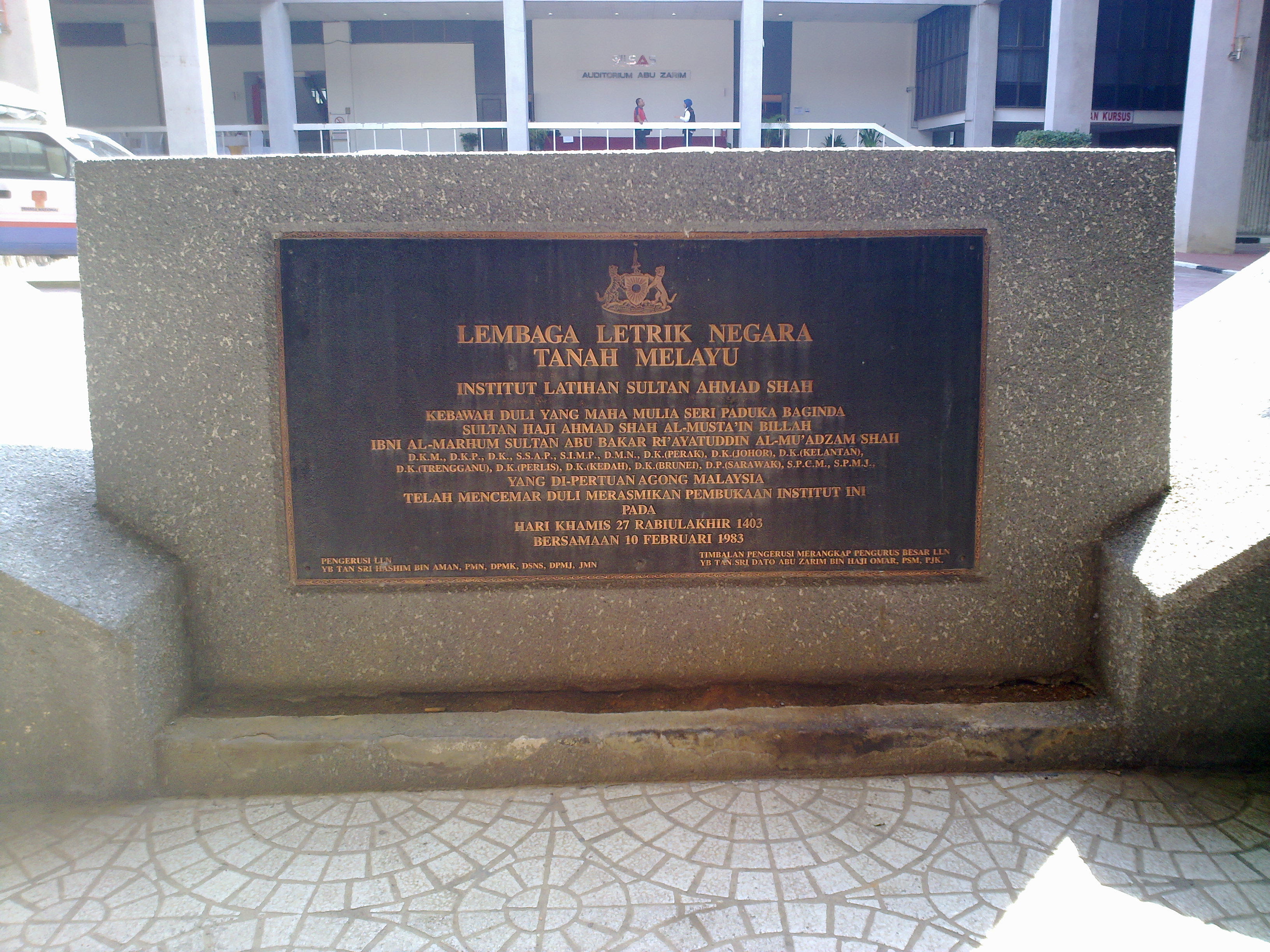
I was recently down at ILSAS to discuss the ongoing training collaboration between them and the IEM.  I took the opportunity to make a Photosynth view of the Admin Building’s main foyer.

Please support the IEM, my technical division (Oil, Gas and Mining) and my ego by becoming members of the IEM, and sending you and your staff to our events. Flyers may be obtained here.

Dedication stone, LLN


Why No Malaysian Owned PSCs?

May 20, 2010

Most people are familiar with the brand name exploration and production companies that come to Golden Chersonese and Borneo and extract hydrocarbons from the ground. However, have you wondered why there are no Malaysian production sharing contractors (PSCs) operating here? By Malaysian, I’ll use an ad-hoc definition and say that the company is majority owned by Malaysians.

It’s not that there aren’t any capable companies. Some existing companies I had in mind were:

  • Genting Oil & Gas – to quote from their website “In China, the Division operates and produces oil from an onshore oilfield under a Petroleum Contract with Sinopec. In Indonesia, the Division has interests in four Production Sharing Contracts, which have been signed with BPMIGAS (Indonesia’s oil and gas supervisory body), and the Division operates three of these contracts, which are all in the exploration phase. While in Morocco the Division operates the Ras Juby Offshore Exploration Permit.”
  • M3nergy – a very old acquaintance of mine. Rumour has it that they are bidding for operation of fields in India and Indonesia.
  • PETRONAS Carigali – Okay, I throw this one into the mix to remind ourselves that they do have operations overseas. Whether they would be competitive enough, or given the opportunity to venture into Malaysia if they weren’t a subsidiary of PETRONAS, is an interesting discussion point.

It is said that we can’t have Malaysia PSC companies because:

  • That politics will come into play, i.e. PLC (Politically Linked Companies). I say, so? In the mind of the rakyat, they already exist, and they are already part of the oil & gas community, albeit in the services and supplies sector. Is it the magnitude of revenue involved in a PSC that causes such an outcry?
  • Greater scope of corruption. Please, you prefer to have corrupt expatriates exporting money to their overseas bank accounts, rather than corrupt locals exporting money to their overseas bank accounts? Within recent memory, wasn’t a CEO or President of a PSC company removed from his post because he was cutting personal deals? Unless people in the oil & gas industry are more corrupt than the national average, I don’t see this as a problem. A larger proportion of the revenue pie stays in Malaysia.
  • Lack of expertise. This one bugs me. If you want, I can name and build a complete PSC team of people I would trust to be as competitive and ruthless as any foreign worker. They probably won’t be the people you want to invite to teh tarik after work, but it’s their competence I’m after, not airy fairy talk and ego stroking. Also, do you know how many locals are working overseas at all levels, from strategic to tactics? Give them a chance, and a decent wage, and I can forge 2 or 3 Malaysian PSC companies.
  • Lack of funds. This I would agree with. But, where there is a will, there’s a way. Let some of the larger venture capitalist companies team up, maybe with an injection of funds from PETRONAS (remember how PCSB started out) and Khazanah (please, invest more of the rakyat’s money in Malaysia), and we should be able to put together a stable, profitable company that is in line with national interests. We may not be very profitable, as we would have social obligations and a Malaysianised corporate citizenship outlook, but give us a chance.

I humbly offer myself to be the No. 1 corrupt dude of these companies. I promise that I will only take 30% max on all transactions. Oh, and a holiday home as well, Kerteh and Redang would be nice.


Malaysia Restricts Foreign Gas Station

May 19, 2010

And I thought it was hard to open a non-Pertamina gas station in Indonesia… any station owners want to comment on this article?

VIVAnews, dateline 2010-4-27:  – Setting up gas stations in Malaysia is apparently not as easy as it is in Indonesia, who lets every multinational oil company opens up new stations. It is difficult for PT Pertamina to establish a petrol station in Malaysia, just like Petronas did in Indonesia.

“Applying for a permit to build a gas station in Malaysia takes three years,” Pertamina Marketing and Trade Director Djaelani Sutomo said in Jakarta on Tuesday, April 27.


Aker Solutions Awarded RM100 Million Contract By KPOC

May 18, 2010

Old news to us in the industry, but finally there’s some public domain information, and I do think its worth more than RM100M.

KUALA LUMPUR, May 6 (Bernama) — Aker Solutions has been selected by Kebabangan Petroleum Operating Company Sdn Bhd (KPOC) as its contractor for the detailed engineering of the Kebabangan (KBB) Northern Hub development project located in the South China Sea, 130km offshore Sabah.

Under the four-year contract, Aker Solutions operations in Malaysia will provide detailed design and engineering support through to the start up phase of the project, Aker Solutions said in a statement Thursday.

Aker Solutions estimates the contract value to be over RM100 million.


Saturday Star 2010-05-15 – Job Opportunities

May 17, 2010

Commercial note: I’m monetizing this site, so support me by purchasing my recommendations, or buying through my Amazon store.

  • For graduates, Technip wants to ‘Engineer a Successful Career’. It is embarking on the Graduate Skill Enhancement Program in Piping Design. They last advertised this program in June, 2009. Visit here soon. Interestingly enough, you can ask the Selangor Human Resource Development Centre as well (isn’t Technip in KL?).  Since sooo many people ask, here’s the basic requirements:
    • Degree in Mech, Pet or ChemEng
    • Min CGPA of 2.5 or 2-2 or better.
    • Ability to speak and write fluently in English. Oh, please let me be the judge of this.
    • < 28 yrs.
  • Murphy (you know, the company who was linked to the acreages ‘lost’ to Brunei?) are still going strong, kudos to them. They are looking for a subsea eng, snr metering eng (I humbly offer myself for consulting services), snr production eng (cut me a long term call off contract), and cost control assistant (we’ll do this to, ehem, ‘control’ the costs of the above two contracts). Send your applications here.

For a food recommendation, how about Peppercorns in SS15. It’s under new management now, but the menu’s still the same. We regularly schedule our management breakfasts and lunches there. For dinner, I could recommend Alisara, a Thai restaurant in Puchong. Food’s good, but a bit dear.


This week is nostalgia video week. I can finally afford to purchase DVD collections of series that were shown in the 80s on TV3. Back then, I don’t think TV3 focused much on showing complete series runs. Now I can afford it, I’m getting a collection of some of the more esoteric series: Robin of Sherwood, Nowhere Man and Wiseguy.


Talisman Energy Reports $837 Million in Cash Flow

May 16, 2010

The article actually talks about Talisman in general, but there topics of interest to Malaysians as well:

In Malaysia, production averaged 35,000 boe/d, an increase of 9% over the previous period and 31% higher than the first quarter of 2009 when PM-3 CAA was shutdown to commission the Northern Fields oil development.


Diving Photos – Terumbu Kili Redang

May 15, 2010

Yup, there is another dive spot in Redang that is really called Sharon Stone, so sue me. I can make up a whole lotta word innuendos from this one.

I need a new camera (how does the Canon EOS 5D Mark II grab you?), so increase the national reading average by buying, I mean reading books I recommend.

A book I like to use to identify fish is Asia Pacific Reef Guide, 3rd REVISED EDITION 2007. Nice clear descriptions, photos, and a few war stories thrown in. BTW, if you have a fish identification book recommendation, I’m all gills.


Murphy Oil Announces First Quarter 2010 Earnings

May 14, 2010

The article actually talks about Murphy Oil in general, but there topics of interest to Malaysians as well:

Oil production declined in Malaysia in the 2010 quarter compared to 2009 due to a lower percentage of the Kikeh field’s gross production being allocatable to the Company under the production sharing contract. But this impact was somewhat offset in Malaysia by new condensate volumes associated with a natural gas field offshore Sarawak.

…

The charges in 2010 were generated due to a combination of a stronger U.S. dollar versus the British pound and a weaker dollar versus the Malaysian ringgit. The stronger U.S. dollar led to foreign currency losses on dollar based liabilities in the sterling functional U.K. downstream operations, and the stronger Malaysian ringgit led to foreign currency losses on ringgit based income tax liabilities in the dollar functional Malaysian oil and gas operations.