The IEM was fortunate that we visited the UTP labs. Here are a couple of videos of floating structure models being tested. The videos were taken from the side of the wave tank.
Marketing Rounds – UTP Research
August 5, 2015
 Leave a Comment » |
  Chemical, Malaysia | Tagged: floaters, UTP |
  Permalink
 Posted by Wata
Anniversary – Seveso Disaster
July 10, 2015Process Safety Engineers never forget.
Leave a Comment » | Chemical | Permalink
Posted by Wata
PCG to finalise Malaysia RAPID project line-up by end-‘15
June 26, 2015Dateline 2015-05-19, ICIS:
Malaysia’s PETRONAS Chemicals Group Berhad (PCG) is planning to finalise investment plans for the Refinery and Petrochemicals Integrated Complex (RAPID) in southern Johor state by the end of this year, the company’s president and CEO said on Tuesday.
“Our team has already started evaluating which are the areas what we want to participate in… By the end of this year, we will most likely know and finalise our participation in RAPID,” Sazali Hamzah told ICIS on the sidelines of the 18th Asia Oil & Gas Conference (AOGC) in Kuala Lumpur.
…
Leave a Comment » | Chemical, Malaysia | Tagged: PCG, Sazali Hamzah | Permalink
Posted by Wata
Chem E Car 2015 – The Tension
June 10, 2015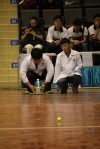

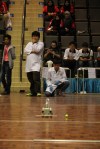
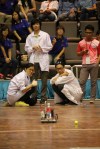
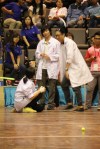
Leave a Comment » | Chemical, Malaysia | Tagged: CETD, ChemECar, IEM, UKM | Permalink
Posted by Wata
Malaysia will be Asia’s biogas hub by 2030
June 5, 2015Time to dust of those old cvs, and update your chem knowledge.
Dateline 2015-04-29, The Chemical Engineer IChemE:
MALAYSIA’S minister of science, technology and innovation, Datuk Ewon Ebin, has told a major conference that the country will be Asia’s biogas hub by 2030.
Datuk Ewon Ebin was speaking at the opening ceremony of the Biogas Asia Pacific Forum 2015, held from 28–29 April 2015 in Selangor, Malaysia, where industry majors met to discuss development strategies in the Asia Pacific Forum. Topics this year included commercialisation, feedstock management, anaerobic digestion and biogas upgrading. The minister said that Malaysia will become the region’s lead biogas exporter to the global market.
According to The Star, Datuk Ewon Ebin said that Malaysia has huge potential biogas resources, particularly from its palm oil industry, which covers 5m ha of land. Biogas generated from palm oil mill effluent can be upgraded to fuel cars and industrial applications, although Malaysia must aim to prove the viability of the upgrading process, he added. As the industry adopts biotechnology, he expects production to grow. At present, the industry is worth RM1.46bn (US$410.1m).
…
Leave a Comment » | Chemical, Malaysia | Tagged: biogas, Ewon Ebin | Permalink
Posted by Wata
Chem E Car 2015 – Pit Stop
June 3, 2015
Leave a Comment » | Chemical, Malaysian election | Tagged: CETD, ChemECar, IEM, UKM | Permalink
Posted by Wata
Anniversary – Flixborough
June 1, 2015Process Safety engineers never forget.
Leave a Comment » | Chemical | Permalink
Posted by Wata
Chem E Car 2015 – Opening Act
May 27, 2015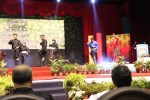


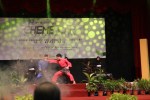
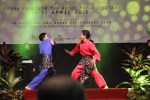

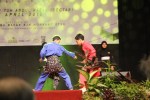
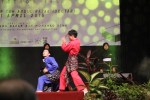



Leave a Comment » | Chemical, Malaysia | Tagged: CETD, ChemECar, IEM, UKM | Permalink
Posted by Wata
Chem E Car 2015 – Guest of Honour
May 20, 2015Deputy Minister of Science, Technology and Innovation Ministry or MOSTI Datuk Dr. Abu Bakar Mohamad Diah
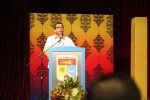

Leave a Comment » | Chemical, Malaysia | Tagged: Abu Bakar Mohamad Diah, CETD, ChemECar, IEM, UKM | Permalink
Posted by Wata
IEM Shout Out – Conversion of Organic Wastes and Unused Biomass to Valuable Materials and Energy Using Sub-Critical Water
April 29, 2015This is a shout out for the IEM. The Chemical Engineering Technical Division (know as CETD to friends) will be having a talk on Wed afternoon, 6th May, 2015, by Dr. Hiroyuki Yoshida .
Dr. Hiroyuki Yoshida obtained B. Eng. Degree in 1969 and Dr. Eng. in 1977 in Chemical Engineering from Osaka Prefecture University, Japan. He worked for this University from 1974 to 2013. He became a professor in 1995. From 2013, he has been working for Department of Chemical and Environmental Engineering, Faculty of Engineering, UPM as a contract professor.
Sub-Critical water is high temperature and high pressure water but lower than those of critical points (647 K, 22.1 MPa). It shows three typical characteristics. Firstly, sub-critical water (sub-CW) has a great hydrolysis power at around 520 K and organic solids quickly decompose into low-molecular-weight valuable materials. Secondly, sub-CW works as a strong solvent and can extract oil almost perfectly at once. Thirdly, when the temperature is higher than about 600 K, hydrolysis power becomes small and pyrolysis power becomes great. The pyrolysis reaction can convert organics to liquid oil (alternative heavy crude oil) and/or solid char.
Leave a Comment » | Chemical, engineering, Malaysia | Tagged: CETD, Chemical, Hiroyuki Yoshida, IEM | Permalink
Posted by Wata

 Wata - Malaysian Oil and Gas Engineer