Shout Out – One Day Course On Process Integration For Waste Minimization And Production Carbon Footprint Reduction

November 29, 2011

This is a shout out for the IEM. My Technical Division will be  hosting a course on the 19th December, 2011. It’ll start at 9:00 and is worth 6 CPD hours. You still gotta climb those steps at Wisma IEM. They promise up that the elevator will be ready by the next AGM.

Due to the growth of world population and concurrent economic development, the demands for natural resources such as natural gas, crude oil and water are increasing rapidly.  For instance, global water withdrawal for most uses (i.e. domestic, industrial, and livestock) is projected to increase more than 50% by 2025.  Fossil fuels (petroleum and other liquid fuels, natural gas, and coal) are expected to continue supplying much of the energy used worldwide. Furthermore, increase of public awareness towards environmental sustainability is reflected in more stringent emission legislation that has motivated the process industries to look into cost effective and more sustainable manufacturing processes.  One of the active areas for cost reduction and sustainable process development is resources conservation activities, where process integration and pinch analysis techniques have been well recognised as promising tools.  In this workshop, the targeting philosophy of process integration is emphasised, where rigorous targets for waste minimisation and carbon footprint reduction can be identified.

The workshop will introduce you to the following topics:

  • How to identify a rigorous benchmark target for waste minimization in a process plant?
  • How to design a resource conservation network that achieves maximum recovery?
  • How can opportunities for carbon footprint reduction be identified?

Ir. Dr. Dominic Foo is a Professor of Process Design and Integration at the University of Nottingham Malaysia Campus, and is the Director for the Centre of Excellence for Green Technologies.  He is a world leading researcher in process integration for resource conservation.  He establishes international collaboration with researchers from various countries in the Asia, Europe, American and Africa.  Dominic Foo is an active author, with two fore-coming books, more than 65 journal papers and made more than 120 conference presentations.  He served as an International Scientific Committee for several important conferences (CHISA/PRES, FOCAPD, ESCAPE, PSE, etc.).  He is the winner of the Innovator of the Year Award 2009 of Institution of Chemical Engineers UK (IChemE), as well as the 2010 Young Engineer Award of the Institution of Engineers Malaysia (IEM).  He actively conducts professional training for practicing engineers.

Register here or download the form here. A map to Wisma IEM is presented here.


Wisma IEM – Upgrades In Progress

November 22, 2011

Soon, you won’t have to walk 2 flights of stair to get those CPD points…


(Cancelled) Shout Out – 2 Day Course on Quality Improvement Via Statistical Process Control

November 15, 2011

This is a shout out for the IEM. My Technical Division will be  hosting a seminar on the 5th till 6th December, 2011. It’ll start at 8:30 and is worth 13 CPD hours. You still gotta climb those steps at Wisma IEM. They promise up that the elevator will be ready by the next AGM.

Statistics are tools used to make predictions on performance. There are a number of simple methods for analysing data and, if applied correctly, can lead to predictions with a high degree of accuracy. Statistical Process Control, SPC is a branch of applied statistics for quality control. It is statistical analysis of the predictability and capacity of a process to give a uniform product. SPC is a popular industry tool for the collection, analysis and interpretation of data for use in quality control activities. This module covers the basic concepts of statistical analysis and their application to practical problems in process control.

The concept of SPC is then further extended for multivariate process. Multivariate Statistical Process Control, MSPC procedures allow production personnel to simultaneously observe several variables on one consolidated chart. Second part of the workshop focuses on multivariate extensions for all kinds of univariate control charts, such as multivariate control charts. In addition, we review unique procedures for the construction of multivariate control charts, based on multivariate statistical techniques such as principal components analysis (PCA) and Hotelling’s T2 method.

Engr. Dr. Lam Hon Loong, is an Assist. Professor with University of Nottingham, Malaysia Campus. He pursued double PhD in Chemical Engineering, 2010 (University of Maribor, Slovenia) and Information Technology, 2011 (University of Pannonia, Hungary).    His research topics are process quality control and supply chain synthesis. He has completed his Bachelor Degree, 2000 and Master Degree, 2004 in Chemical Engineering, both from Universiti Teknologi Malaysia with specialisation in process system engineering.

Register here or download the form here. A map to Wisma IEM is presented here.


IEM Shout Out – Talk on An Overview of Heat Exchangers: The Industry Experience

November 8, 2011

This is a shout out for the IEM. My Technical Division will be  hosting a seminar on the 11th November, 2011. It’ll start at 9:00am and is worth 2 CPD hours. You still gotta climb those steps at Wisma IEM.

This is held in conjunction with our AGM. Please turn up for that as well.

The subject of Thermodynamics taught in college always refers to Heat Exchanger as the equipment to exchange heat. However, not many engineers post-graduation have the opportunity to work directly with Heat Exchangers. These Heat Exchangers are widely used in the industries, especially in the Oil & Gas facilities. There are various types of heat exchangers which are selected based on specific intended process requirement.

The talk will provide an overview on the types of heat exchangers commonly used in the Oil & Gas industry based on the Codes & Standards used during the design such as the Shell & Tube Heat Exchangers, Air-Cooled Heat Exchangers, Double Pipe Heat Exchangers and the Plate Heat Exchangers. This will be followed by an example of the fabrication processes, the common welding processes such as GTAW, SMAW, SAW and the main forming processes such as plate rolling and tube bending.

Ir. Alzakri Ekhwan is a Principal Engineer for Static-Unfired Equipment at PETRONAS Penapisan (Melaka) Sdn. Bhd. (PP(M)SB), an oil refinery that handles 270,000 bbl per day of crude oil.  He graduated from University of Bath, UK in Mechanical Engineering in 1993 and has more than 18 years of experience in the design, fabrication, maintenance, inspection and construction of Static Equipment in the Oil and Gas industry.

Register here or download the form here. A map to Wisma IEM is presented here.


IEM Shout Out – Talk on Risk Sharing Contracts

November 6, 2011

This is a shout out for the IEM. My Technical Division will be  hosting a seminar on the 11th November, 2011. It’ll start at 12:00pm and is worth 2 CPD hours. You still gotta climb those steps at Wisma IEM.

This is held in conjunction with our AGM. Please turn up for that as well.

In a typical Risk-Sharing Contract (RSC), the responsibilities, roles and risks are allocated therein to the various parties and agent. RSCs maybe fashioned for projects that may be turnkey or Engineering, Procurement & Construction (EPC) in nature up to that of Project Delivery Partner (PDP).

That PDP typically endeavors to spell out i) Project Management Role ii) EPC Role; iii) Parties Risks and Rewards (with the proportionate Increase); and cover the following critical project parameters i) Development ii) Construction iii) Completion iv) Delivery v) Targets vi) Rewards; and vii) Losses. Other aspects typically treated under PDP i)Project Viability – “Strike Rate” ii)Site Possession iii) Ground Conditions – Employer/Contractor iv) Completion v) Delays vi)Performance Guarantees; and vii)Financing – Developer/Sponsor.

Khem N Thadani holds an LL.M (University of Melbourne, Australia) and LL.B( University of Canterbury, New Zealand), and also an Advocate and Solicitor of High Court of Malaya, Barrister and Solicitor of High Court of New Zealand and Supreme Courts, Federal and High Court of Australia.

Register here or download the form here. A map to Wisma IEM is presented here.


Shout Out – Talk on Cleaner Production for Engineers

March 15, 2011

This is a shout out for the IEM. My Technical Division will be hosting a talk on the 21st March, 2011. It’ll be at 5:30 pm (makan-makan at 5:00). You still gotta climb those steps at Wisma IEM.

 Cleaner Production (CP) means the continuous application of an integrated preventive environmental strategy to processes and products. For production processes, CP includes conserving raw materials and energy, eliminating toxic raw materials, and reducing the quantity and toxicity of all emissions and wastes. CP acceptance and awareness among industries in Malaysia and ASEAN region are increasing, especially among the small and medium industries. In this talk, the speaker will be sharing his experience on how engineers can utilise their expertise in implementing cleaner production concept in an existing and new premises using examples.

The Speaker, Ir. Dr. Abdul Aziz Abdul Raman is an Associate Professor at the Chemical Engineering Department, University of Malaya. He is involved in various research activities and have published more than 85 publications in local and international journals and proceedings.

 Register here or download the form here. A map to Wisma IEM is presented here.


IEM Shout Out – Talk on Energy Management Gold Standard

February 10, 2011

This is a shout out for the IEM. My Technical Division will hosting a talk on the 12th February, 2010. It’ll be at 9:00 am (makan-makan at 8:30). You still gotta climb those steps at Wisma IEM.

Today’s global challenge is meeting energy demand in a sustainable way. Access to clean, secure and efficient  energy supply has been increasingly important and is a central concern for policy maker. Effective use of energy  could bring about a three-fold impact :- improving energy security, reducing energy cost and minimizing adverse  environmental impacts due to energy consumption. For business operating in highly competitive global environment, there are pressing needs to maximize operational efficiencies of the equipment and systems installed. To support the initiatives Malaysia has introduced the Efficient Management of Electrical Energy Regulation 2008 (EMEER) under Energy Commission. EMEER requires any installation that generates or consumes more than 3,000,000 kWh in 6 consecutive months to appoint a Registered Electrical Energy Manager (REEM).

The speaker for this event is Ir. Al-Khairi Mohd Daud , P.Eng, C Eng, MIEM . You can register for the event here.  A map to Wisma IEM is presented here.


IEM Shout Out – OGMTD 20th AGM

November 9, 2010

The OIl, Gas and Mining Technical Division AGM will be held at 2nd Floor, Wisma IEM, 21 Jalan Selangor, Petaling Jaya.

It will be held at 11am on Saturday, 13th November 2011.

AGENDA

1. Opening Address by the Chairman of Session 2009/2010.

2. Confirmation of Minutes of the 19th Annual General Meeting held on 21 November 2009

3. Matters Arising.

4. Secretary’s Report for the Session 2009/2010

5. To receive and adopt the Financial Statement for the year ending 30 October 2010

6. Election of the Office Bearers for the Session 2010/2011

7. Address by the Chairman for Session 2010/2011

8. Any Other Business


Your presence will contribute to the success of this meeting.

The flyer for the above event is available here. Flyers for other events may be obtained here. A map to Wisma IEM is presented here.


From Bernama – Penjanabebas Says IPPs Don’t Benefit From Gas Subsidy

August 10, 2010

Oh, I can see this news article causing a look of disbelief on people’s faces. Maybe I should get the IEM to give a talk on the topic, so I can capture peoples’ expressions on my trusty Canon A-1.

Dateline 2010-07-21, taken from Bernama:

The Association of Independent Power Producers in Malaysia (Penjanabebas) on Wednesday said it is unfair to portray its members as beneficiaries of gas subsidy.

It said the cost of gas as a fuel to generate electricity is a component that the IPP industry does not derive any financial benefit from but instead, the savings from gas subsidy is passed on to consumers through the tariffs.

“Under the Malaysian IPP model – in line with the international norm in power purchase agreements – gas costs operate under a “pass” through” mechanism, whereby all gas supplies are provided directly to gas-fired generators at cost determined by the government.


IEM Report – Visit to Bintulu

August 6, 2010

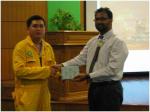
The IEM Chemical Engineering Technical Division organized a study tour to Bintulu, Sarawak on June 14th, 2010. The study group comprised of 9 people. The tour was led by Ir. Razmahwata Mohd Razalli.

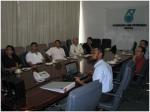
The tour started at the MLNG plant. The group was met by Mr. Rhymie Rashidie Ibrahim, Corporate Affair. The IEM guests were first brought to a presentation room where a safety briefing was first conducted. A corporate video was then shown, providing an overview of the history, specifications and achievements of the MLNG project.

After getting a bird’s eye view of the facility, a slide presentation was given. It started off with an introduction to the MLNG complex, and a recap of MLNG 1-3’s history. A simplified LNG process flow diagram was then used to describe the plant’s process to the group.  An introduction to the technology and use of MISC’s LNG ships was provided, along with the breakdown of LNG customers (60% of LNG is shipped to Japan, 27% Korea, 12% Taiwan, 0.9% China. 19% of Japan’s LNG is imported from Malaysia).

At the end of the presentation, a number of questions were asked, and answered by the speaker. A selection of questions asked were the usage of LNG in Malaysia, the makeup of engineers disciplines in MLNG, the mercury removal process from the gas, and MLNG’s involvement in downstream industries.

This part of the tour was concluded with a token exchange ceremony.

After refreshments, a plant tour was arranged, guided by a knowledgeable engineer. The group had the opportunity of observing the plant from the luxury of an air conditioned van. Among the sites the group visited  were the nine 380 tph boilers, the gas metering station, flare tower, the cryogenic unit, the mercury removal unit, the Sulphinol process, and the LNG berthing terminal, where Putri Delima Satu was in port.

After the MLNG visit, the group then visited the ABF plant. The group was met there by Mr. Roy Thian Shin Min, Process Technologist and Ms. Suryani Dohan, PR Executive. Mr. Roy presented an introduction of the plant. Among the commercial tidbits revealed was the ownership breakdown of the plant (63.5% Malaysia, 13% Indonesia, 13% Thailand, 9.5% Philippines, 1% Singapore) and the plant’s market breakdown (30% of ammonia is sold to Thailand, 20% to Malaysia, 24% to Vietnam) . He then talked the group through a process schematic of the plant. Among the process discussed were CO2 removal using a modified Benfield process, steam reforming using NiO catalyst in tubes, and the urea process. The uses of ammonia and urea was explained to the group. The presentation ended with an overview of the plant’s corporate social responsibility (CSR) activities. Among the questions asked by the group was what biuret was, and how much CO2 was released by the plant.

This part of the tour was concluded with a token exchange ceremony, and lunch that was hosted by the ABF.

As the plant was not open for a visit at the time, the group was taken to view the plant from a vantage point on top of the Bintulu Port Authority building, where we were treated to a breath-taking view of the plant and surrounding environs.