The package says it all:
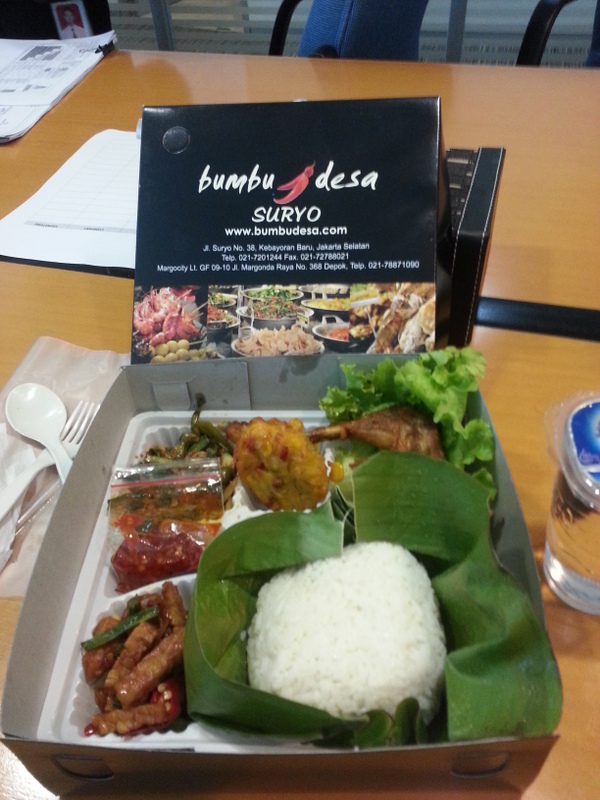
The package says it all:
 Leave a Comment » |
  Uncategorized | Tagged: Bumbu Bali, food, Jakarta |
  Permalink
 Posted by Wata
Guess where the HAZOP was held?

Leave a Comment » | engineering, oil and gas | Tagged: food, HAZOP | Permalink
Posted by Wata
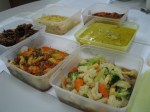
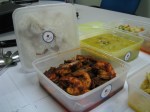
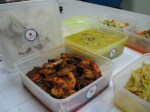
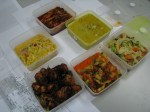
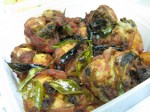
Once in a while, we have a makan-makan session in the office. The staff aren’t shown, because watching them eat may be a bit… unsettling.
2 Comments | Malaysia | Tagged: food, SOGE, Synergy | Permalink
Posted by Wata
As I go through my exclusive collection of photos, I am reminded that there are not many luxuries out there. One of life’s simple pleasures that your company can splurge on is food. This was taken during Ramadhan offshore, many moons ago.

There used to be barter trade between the platform folk and fisherman who were fishing nearby. For a hot meal or three, the fisherfolk would send up some of their choicest fish, to be cooked per request. To get a closer look at their catch, the platform folks would even use binoculars, as they were at 30m elevation looking down on a small 10m boat.
If you want to irritate oil and gas people who stay offshore for weeks on end, serve them bad food, lukewarm food and not enough food.
1 Comment | Malaysia, oil and gas | Tagged: fishing, food | Permalink
Posted by Wata
Continuing from Part I, (The original article may be found here)
Question:
What is the ruling on using materials to which “animal glycerine” has been added, such as toothpaste, shampoo and body moisturizers. What is the ruling on mono-glyceride and di-glyceride, which are added to some kinds of bread? Is the basic principle that one should check or ask about the source of these materials, and find out whether they are animal or vegetable? Is checking on these things regarded as a kind of going to extremes? How should we respond to those who say that the basic principle is that a thing is permissible so long as it is not mixed with anything haraam? Or those who say that religion is easy and we should not go to extremes or ask too much?
Answer:
(…)
Secondly:
It may become halaal if the fat has turned (via some process) into something else, so that it is no longer called fat and does not have the characteristics of fat. If that is the case then it does not come under the same ruling. This is what the scholars call istihaalah (process to change a substance to something else) and it may be looked at from two angles. That which was good and permissible but has become bad and impure, is now haraam, and that which was bad and impure but has become permissible and good is now halaal.
Ibn al-Qayyim said:
Based on this principle, alcohol is impure, even though its origin is pure. If the reason for its being regarded as impure is no longer present, then it is to be regarded as pure. This is the basis of sharee’ah and the basis of reward and punishment.
Based on this, the correct analogy is that this principle may be applicable to all other impurities if they have gone through a process of change. The Prophet (peace and blessings of Allaah be upon him) removed the remains of the mushrikeen from the site of his mosque, but he did not remove the soil. And Allaah says of milk that it comes “from between excretions and blood” [al-Nahl 16:66]. The Muslims are unanimously agreed that if an animal eats impure things, but it is then detained and fed with pure things, its milk and meat become permissible. The same applies to crops and fruits: if they are watered with impure water, but are then watered with pure water, they become permissible, because of the change (istihaalah) in the impure thing, which becomes pure. The converse also applies: if the pure thing changes into something impure, then it becomes impure (naajis), like water, and food when it changes into urine and faeces. So how can the change affect it when good turns into bad, but not affect it when bad turns into good, and Allaah brings forth pure things from impure things and impure things from pure things?
It is not the origin of a thing that matters, but what it is now. It is impossible for the ruling on impurity to remain when the name and character of the thing have changed. The ruling is connected to the name and character, and is present or absent depending on whether they are present or absent. The texts which deal with the prohibition on dead meat, blood, pork and alcohol do not deal with crops, fruits, sand, salt, soil or vinegar, whether in wording or meaning or text or analogy. Those who distinguished between the change (istihaalah) of alcohol and other things said that alcohol becomes naajis because of the process of change, then it may become pure because of a further process of change. It was said to them that blood, urine and faeces became impure because of a process of change so they may become pure because of a further process of change. Thus analogy is in accordance with the text.
I’laam al-Muwaqqi’een (2/p. 14, 15)
In a statement issued by the Islamic Medical Sciences Organization in Kuwait – which discussed the issue of Haraam and impure substances in food and medicine, from 22-24 Dhu’l-Hijjah 1415 AH/ 22-24 May 1995 – it says:
[8.] Istihaalah (process of change) means that a substance changes into another substance with different characteristics, so an impure substance may change into a pure substance, and a haraam substance may change into one that is permissible according to sharee’ah.
Based on that:
Gelatin which is produced by the change of the bones, skin and tendons of impure animals is taahir and it is permissible to eat it.
Soap that is produced by the change of fat from pigs or dead meat becomes pure by means of this process and it is permissible to use it.
Cheese which is made by using rennet from dead meat of animals whose meat is permissible is taahir and it is permissible to eat it.
Ointments, creams and cosmetics that contain pork fat are not permissible to use unless there is certainty that the fat has undergone a process of change (istihaalah) and turned into a different substance. But if there is no certainty, then they are naajis (impure).
End quote.
For more information please see:
<http://www.islamset.com/arabic/abioethics/muharamat.html> [in Arabic].
(continued)
Leave a Comment » | engineering | Tagged: fatwa, food, halal, haram | Permalink
Posted by Wata
 Paypal donations accepted.
 Wata - Malaysian Oil and Gas Engineer