IEM Shout Out – Overview Of Aboveground Atmospheric Storage Tanks In Oil And Gas Facilities

April 9, 2013

This is a shout out for the IEM. My Technical Division will be having a talk on 13th April. It’ll be at 9:00 am (makan-makan at 8:30) at Wisma IEM. We do have a lift, so no excuse. I have bad knees, and still manage to crawl up 2 flights.

Storage tanks are common equipment found in oil and gas facilities. They are used for temporary storage of products prior to being transferred to the next process activity. Atmospheric Storage Tanks operate under no or very little pressure, distinguishing them from pressure vessels.

The talk will provide an overview on the types of Aboveground Atmospheric Storage Tanks commonly used in the Oil and Gas industry. Some of the common types will be Fixed-Roof type and Floating-Roof type. The talk will also explain in more details the accessories associated with the tanks such as the Breather Valve, Floating Roof Drain, Floating Roof Seal, Rolling Ladders, Liquid Level Indicator, Anti Rotation Device and Roof Legs.

Some common failures in Aboveground Atmospheric Storage Tanks such as Pontoon leaks, Roof Drain puncture, Bottom Plate leak, Shell thinning and others will be shared, followed by typical types of Non Destructive Tests (NDTs) and Inspection carried out during erection and scheduled maintenance of these tanks.

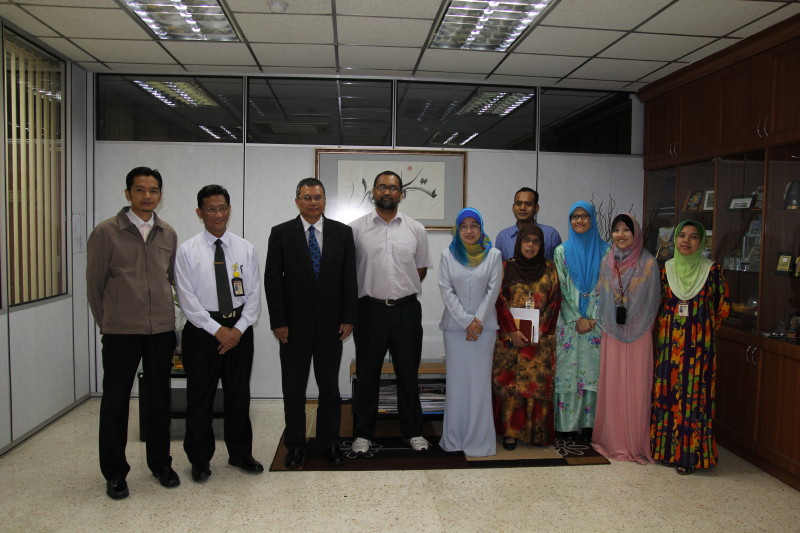
The above will be presented by Ir. Alzakri B. Ekhwan. He is a Principal Engineer for Static-Unfired Equipment. He was graduated in 1993 from the University of Bath, UK in Mechanical Engineering. He is currently based in PETRONAS Penapisan Melaka Sdn. Bhd. (PP(M)SB) and has more than 19 years of experience in maintenance, design, fabrication, inspection and construction of Static Equipment in the Oil and Gas industry.

You can register for the event here, and retrieve the flier here.


Tales from the Engineering Floor – Part Time Job

April 9, 2013

I was standing outside Madam Kwan’s at Suria KLCC, waiting for a contact to do some afterhours dealings. Not wanting to be caught holding the bag alone, I invited a couple of engineers to come with me.

As we were early, I told my engineers to book a table inside, and gestured to them to go in first. I happened to be standing in front of the restaurant podium.

My gesturing must have been something, as after I send my engineers in, I turn around, and there’s this lass who says to me:

Table for two, please.

Good thing I didn’t charge her a RM20 booking fee and legged it. I pointed into the interior, she waltzed in, and probably gave hell about where her promised table was.

Restaurant host is now a new category in my CV.


Puncak Oil unit in O&G tie-up

April 4, 2013

From The Star, dateline 2013-03-29:

 Puncak Oil & Gas Sdn Bhd’s wholly-owned subsidiary GOM Resources and MedcoEnergi Internasional Tbk have signed a memorandum of agreement to cooperate in oil and gas (O&G) field development projects and the risk service contract projects in Malaysia as well as exploration and production opportunities, regionally.


Petronas considers RM5 billion Islamic bond programme

April 3, 2013

Dateline 2013-03-29, Borneo Post Online:

Malaysia’s Petronas Gas Bhd (Petronas Gas) is considering setting up a RM5 billion (US$1.6 billion) Islamic bond programme to part finance the construction of regasification plants, three people familiar with the deal said.

The gas distribution arm of state oil company Petroliam Nasional Bhd (Petronas) invited proposals from investment banks to arrange the debt sale, said the people, who asked not to be named as the details were private.

A sale would be the Kuala Lumpur-based company’s second offering of sukuk, or debt that paid returns on assets to comply with Islam’s ban on interest.

It sold RM860 million of syariah-compliant notes in August via unit Kimanis Power Sdn Bhd to part finance a power plant, with maturities ranging from 2016 to 2028.

The 5.05 per cent notes due in 2023 yielded 4.23 per cent on Wednesday, according to data compiled by Bloomberg.


IEM Shout Out – Overview Of Aboveground Atmospheric Storage Tanks In Oil And Gas Facilities

April 2, 2013

This is a shout out for the IEM. My Technical Division will be having a talk on 13th April. It’ll be at 9:00 am (makan-makan at 8:30) at Wisma IEM. We do have a lift, so no excuse. I have bad knees, and still manage to crawl up 2 flights.

Storage tanks are common equipment found in oil and gas facilities. They are used for temporary storage of products prior to being transferred to the next process activity. Atmospheric Storage Tanks operate under no or very little pressure, distinguishing them from pressure vessels.

The talk will provide an overview on the types of Aboveground Atmospheric Storage Tanks commonly used in the Oil and Gas industry. Some of the common types will be Fixed-Roof type and Floating-Roof type. The talk will also explain in more details the accessories associated with the tanks such as the Breather Valve, Floating Roof Drain, Floating Roof Seal, Rolling Ladders, Liquid Level Indicator, Anti Rotation Device and Roof Legs.

Some common failures in Aboveground Atmospheric Storage Tanks such as Pontoon leaks, Roof Drain puncture, Bottom Plate leak, Shell thinning and others will be shared, followed by typical types of Non Destructive Tests (NDTs) and Inspection carried out during erection and scheduled maintenance of these tanks.

The above will be presented by Ir. Alzakri B. Ekhwan. He is a Principal Engineer for Static-Unfired Equipment. He was graduated in 1993 from the University of Bath, UK in Mechanical Engineering. He is currently based in PETRONAS Penapisan Melaka Sdn. Bhd. (PP(M)SB) and has more than 19 years of experience in maintenance, design, fabrication, inspection and construction of Static Equipment in the Oil and Gas industry.

You can register for the event here, and retrieve the flier here.


Saturday Star 2013-03-30 – Job Opportunities

April 1, 2013

Buy my recommendations, or through my Amazon store. Where are those corporate sponsors? Or throw donations at me. I need money to purchase a dive light.

If you need my help to submit your CVs, donate to the blog, and I’ll review your CV to see if it is worthy of my (and my associates’) expectations. If you can’t figure out how to donate, no need to ask.

This week, it looks like you (the advertisers) are recycling last weeks adverts. Since it’s a holiday today (Monday), I guess you are justified

  • I’m looking for a senior process engineer, 7+ years experience. Send your cv here. Also looking for process safety persons, lead piping designer, lead instrument engineer, and other seniors you think will catch my eye.
  • Shell is looking for (many) drilling rig supervisors. Visit here. Have all their best and brightest been recruited by PETRONAS?
  • I see Petrofac is looking for a development manager. Send your cv via snail mail to Human Resource Department, Petrofac (Malaysia-PM304) Limited, Level 21, Menara 3 PETRONAS, Persiaran KLCC, Kuala Lumpur City Centre, 50088 KL, or you can try here.
  • McDermott are looking for people, project engineering managers, structural lead engineers, mechanical lead engineers, instrumentation lead engineers, subsea lead engineers, all with 10+ year experience. Visit the website, or submit your CV  here.

How about some local food? Alisara at Puchong Indah. Specialises in Thai food, and has mango with stick rice.

Break the Low Yat stranglehold! Support Newegg Malaysia.

Here’s a switch, a fiction novel combining diving, welding, oil & gas and family.


The Underwater WelderWelding: Principles and ApplicationsProfessional Diver’s Manual on Wet-Welding

LNG: A Nontechnical GuideFundamentals of Natural Gas Processing, Second Edition (Dekker Mechanical Engineering)Gas and Oil Reliability Engineering: Modeling and Analysis


From The Engineering Floor – HAZID Keywords

March 31, 2013

When a Hazard Identification (HAZID) exercise is conducted, a multi-skilled team of experienced persons come up with credible hazards that could have a safety, health or environmental (SHE) impact.

One thing that you may forget, if you have a large, onshore facility is that in the process of creating your cash cow (aka plant/ facility), you may have impacted the local ecology to a large extent.

I have the privilege of watching what may go wrong if a HAZID hazard is not addressed properly. Look here and here.

Yes, this is not in Malaysia, but I was there. So there.


Roc Oil confirms eastern extent of Malaysia’s Spaoh field

March 30, 2013

Dateline 2013-03-22, by Proactive Investors:

Roc Oil’s (ASX: ROC) third well at the Balai Cluster Risk Service Contract offshore Malaysia has confirmed the eastern extent of hydrocarbons in the Spaoh field.

Spaoh-2 intersected 30 metres of net hydrocarbon pay across six sandstone reservoir intervals.

It has been cased and completed in preparation for extended well testing with the Early Production Vessel Balai Mutiara.

Roc is now preparing to move the rig 5 kilometres northwest of Spaoh to drill the West Acis-2 well.


RHB Research says 2013 “will be a good year” for Malaysia’s oil and gas industry

March 29, 2013

Dateline 2013-03-19, The Star:

RHB Research Institute believes 2013 “will be a good year” for the local oil and gas (O&G) industry on the back of improving jobs visibility.

Sectoral analysts Danny Chan and Mohd Faisal said in the industry upgrade report that the next focus for Petroliam Nasional Bhd (Petronas)is its push on domestic production growth which would likely benefit local service providers.


King of the past reaching for Malaysia oil reserves

March 28, 2013

Yeah, baby. Someone else said it, not me. Dateline 2013-03-19, from RT (what the heck is RT?)

Malaysia, boasting the third-largest oil reserves in the Asia-Pacific region, finds itself on the verge of a military fight over its richest region.

Malaysia has been in the midst of an ongoing security crisis since early February, when a group of 235 rag-tag militiamen from the neighboring southern Philippines slipped into the eastern state of Sabah and began occupying several villages. While engaging police in multiple firefights, the insurgents beheaded and mutilated several captured Malaysian security personnel, prompting Malaysian forces to deploy fighter jets in an unprecedented air assault over the area in an operation to flush out the intruders. The gunmen call themselves the “Royal Army of the Sulu Sultanate,” representing the heirs of a long-defunct kingdom which once controlled the territory up until the late nineteenth century. The so-called Sultan of Sulu, Jamalul Kiram III, who is believed to be directing the militant incursion from Manila, insists that Sabah is rightfully part of his kingdom and has vowed not budge on his claims even if his personnel are killed in the standoff.