Bad Example of Debottleneck

May 28, 2008

As a process consultant, one regular request that crops up is to debottleneck a process. That is, identifying what stage limits the capabilities of a plant. It could be vessel, pumps, compressors… actually it usually turns out to be the compressors, as they are expensive pieces of hardware, and sized to just barely meet the design intent (provocative statement, rotating machinery engineers!).

Now, what happens that as you remove one bottleneck, another one crops out, which you will tackle ad infinitum until your rate of return drops below your tolerance limit.

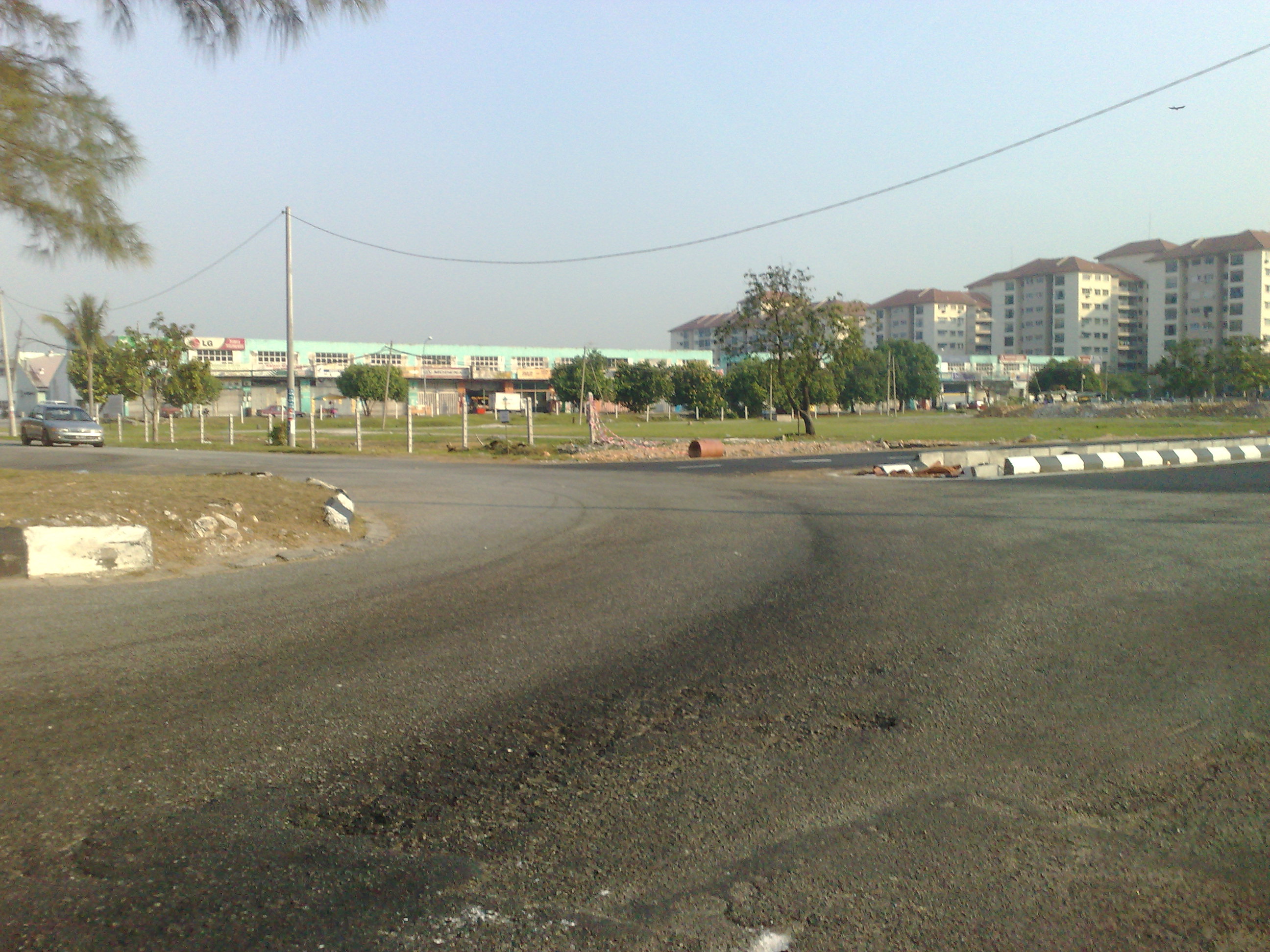
To put this in perspective, I’ve attached a video of a new road which was meant to debottleneck traffic by replacing a curvy toll bypass with a straight length. Problem is, it dead ends from a 4-lane road to a 2-lane road which feeds into another 2-lane road, which is the real bottleneck.


Photos of the link road follow, in a direction opposite to the video just to confuse things:

Start of Bottleneck Entering the debottleneck Leaving the bottleneck And back to the old road


Saturday Star 08-05-24 – Job Opportunities

May 27, 2008

Another week, another scan of the Saturday Star newspaper. Here’s a list of job ads in the paper:

  • Technip has a 2 page spread for engineers. Visit their website.
  • Occidental Petroleum of Qatar Ltd as an ad. Occidental was the operator of Piper Alpha, by the way when things hit the fan.
  • Happy hunting. Let me have some feedback if you find this list useful. Even better, spread the news. PayPal donations welcome.

I put in a free advert for my favourite chicken rice place, Chee Meng. Go, people, go! I’m waiting for their loyalty card to come out…


Engineering – Boutique / Budget, and the MAS / Firefly Model

May 26, 2008

Here’s a thought. Say you really want to break into a new engineering market (characterization, dynamic simulation, flow assurance). Business sense might dictate that in order to get recognised, you have to win jobs in that market (business sense hah, try common sense).

Problem is, to win those jobs and gain goodwill, you might have to lower your cost, sometimes much below that of the jobs you do in your current market, while maintaining the same quality of product. Your plan is to raise your rates once you have established yourself as a provider of world-class product, and command fees to boot.

An alternate case is that your new clients are only interested in cost only, and as soon as you raise your rates, it’s bye-bye time. You may also have spoiled your core business, as word spreads that you can be got at lower prices as long as the other parties stick to their guns.

Here’s a solution. Seek out these new fields using the name of another company, one you don’t mind associating with low cost. For example, your boutique is called MAS, and your budget line is called Firefly. After you convince your clients that they really want MAS services, close down Firefly (or stop responding to invitation to bids), and tell them that MAS will provide the services they value so highly, which comes with a price.

At least MAS is still seen as a boutique.


Overhead on the Engineering floor

May 25, 2008

“penc! It’s still red!”

– Overhead while engineer is building a Hysys model.

(note: penc is ROT-13 translated, for us old timers out there.)


Custody Metering Zen

May 24, 2008

Here’s a dramatically enhanced version of a true story.

An offshore Malaysian oil and gas asset (which shall forever remain nameless unless someone beats the truth out of me) has had some custody metering problems. They have not been able to prove their liquid turbine meters. So, someone from Operations Technical Support goes out to have a look.

The person steps up to the custody metering flow computers, stares at them, becomes one with them, and tells the platform technicians:

“Cool down the computers.”

It turns out that the control room where the computers are mounted and adjoining electrical room have a defective air conditioning system, something about leaking coolent pipes, and the room has been heating up. The flow computers were heated up enough such that electronic errors in the FCs were causing tolerances to be exceeded.

So portable A/C units were directed towards the FCs. Problem solved.

When you reach this level of CT Zen, then you can be called ‘guru’.


How much Oil is there in a Reservoir?

May 23, 2008

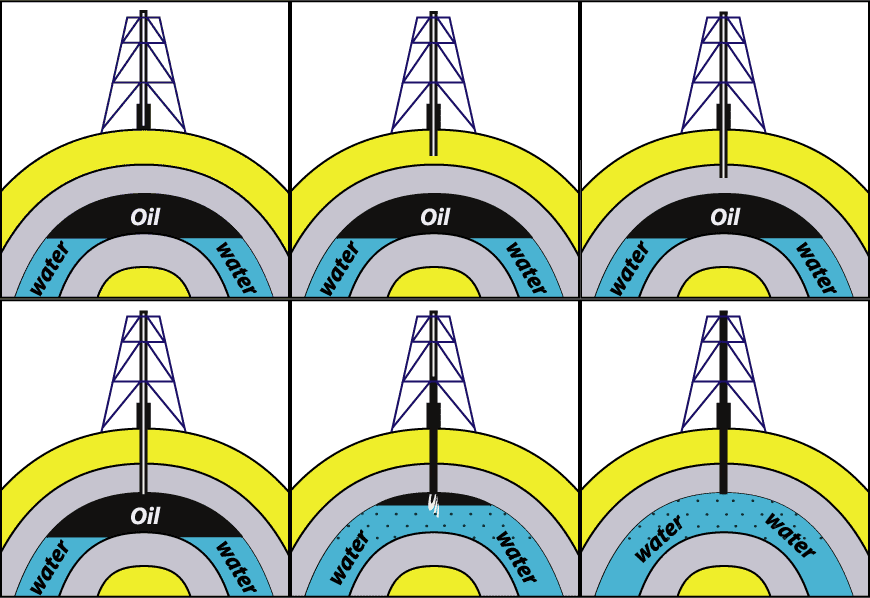
We are all used to diagrams like this:

Oil Reservoir

(hit your browser’s “refresh” button to see this animation again)

It seems as if there is a large cavern underground, where oil swishes and swirls, waiting to be sucked up via the production string. Dream on.

  • Oil is contained within rock. The porosity of the rock is variable, take an average of 20%.
  • Of the oil in the pores (called hydrocarbon in place), perhaps 15-60% is recoverable if you rely on the reservoir pressure ‘squeezing’ the oil into your production string (called primary recovery), and up to the surface. The rest either sticks to the rock, or is not recoverable when pressure is no longer available.

So, out of 1m3 (1000 kl) of rock, you get between 30-120 kl of oil during primary recovery.

How do we get more of the remaining oil out? That’s in an upcoming entry.


Interesting Fatwa for Chemical Engineers – Last Part

May 22, 2008

Continuing from Parts I, II and III,

Ruling on using materials to which “animal glycerine” has been added

Question:

What is the ruling on using materials to which “animal glycerine” has been added, such as toothpaste, shampoo and body moisturizers. What is the ruling on mono-glyceride and di-glyceride, which are added to some kinds of bread? Is the basic principle that one should check or ask about the source of these materials, and find out whether they are animal or vegetable? Is checking on these things regarded as a kind of going to extremes? How should we respond to those who say that the basic principle is that a thing is permissible so long as it is not mixed with anything haraam? Or those who say that religion is easy and we should not go to extremes or ask too much?

Answer:

(…)

Fifthly:

The Muslim should be careful with regard to his food, drink, clothing and all matters in his life. He should be careful to ensure that his wealth is halaal and he should be careful to ensure that what he eats and drinks are things that the Lord has permitted to him. And he should be careful in all areas of his life to ensure that none of them goes against the Qur’aan and Sunnah.

It is essential to distinguish between products that are used in daily life and meat. The basic principle in the former case is that they are permissible unless there is proof to the contrary, and the basic principle with regard to meat is that it is haraam – as stated above by Ibn al-Qayyim – unless there is evidence to the contrary.

The scholars of the Standing Committee, when asked about pork fat in some kinds of soap and toothpaste, said:

We have not heard through any trustworthy channels that some cleaning materials contain pork fat, such as Camay and Palmolive soaps and Colgate toothpaste. Rather we have only heard of that through rumours.

Secondly: the basic principle with regard to such things is that they are taahir (pure) and it is permissible to use them, until it is proven from a trustworthy source that they are mixed with pork fat or some similar impure substance which it is haraam to use. In that case it is haraam to use them. But if the news is no more than a rumour and is not proven, then it is not obligatory to avoid using it.

Thirdly: The one who has proof that the cleaning material is mixed with pork fat must avoid using it, and he must wash off whatever of it is on him. But the prayers that he offered during the time when he was using it do not have to be repeated, according to the correct scholarly opinion.

Shaykh ‘Abd al-‘Azeez ibn Baaz, Shaykh ‘Abd al-Razzaaq ‘Afeefi, Shaykh ‘Abd-Allaah ibn Ghadyaan, Shaykh ‘Abd-Allaah ibn Qa’ood.

Fataawa al-Lajnah al-Daa’imah (5/385, 386).

And they said:

With regard to the manufactured cheese which many people say contains pork fat, we have no proof that it contains pork fat. The basic principle is that things are permissible, but if a person is certain that it contains pork fat or he thinks this is most likely to be the case, it is not permissible for him to use it.

Shaykh ‘Abd al-‘Azeez ibn Baaz, Shaykh ‘Abd al-Razzaaq ‘Afeefi, Shaykh ‘Abd-Allaah ibn Ghadyaan, Shaykh ‘Abd-Allaah ibn Qa’ood.

Fataawa al-Lajnah al-Daa’imah (22/111)

Shaykh Muhammad ibn Saalih al-‘Uthaymeen (may Allaah have mercy on him) was asked:

We have found some publications which say that some soap is made from pork fat. What is your opinion?

He replied:

I think that the basic principle is that everything that Allaah has created for us on earth is permissible, because Allaah says (interpretation of the meaning):

“He it is Who created for you all that is on earth”

[al-Baqarah 2:29]

If someone claims that something is haraam because it is impure etc, then he must bring evidence, but believing all kinds of illusions and everything that is said makes no sense. If he says that this soap is made of pork fat, we say to him, “Bring proof.” If it is proven that most of it is made of pork fat, then we must avoid it.

Liqaa’aat al-Baab il-Maftoohah (31/question no. 10).

And Allaah knows best.


Why a Vacuum of Mid Range Senior Engineers?

May 21, 2008

A question asked often is (usually by me when a job I am doing is going pear shaped due to a rush), where are all the Malaysian mid-range engineers? By mid-range I mean those with about 8 -13 years experience.  Are they out there, lurking for the right time to reappear? I hope it isn’t when oil reaches USD 150 / barrel, and pay is given in liquid gold.

My theory is this: I think that when I returned from my studies, engineering was not a favoured career. Everyone wanted to go into finance, then IT, then anything but engineering.

So, let’s do the math. I came back in 1995. So people who entered uni then would leave around 1998-2000. So, they would have 8 years experience.

Allowing for engineers not interested in engineering due to the 1997 financial crisis (engineering projects having been cut back), then engineers would enter uni around 2000, graduate around 2003-5. These would now have 3-5 years experience.

So, us people who entered the engineering field when it was an unglamorous profession… we should be proud. Too bad pride is not a commodity we can sell.


Saturday Star 08-05-18 – Job Opportunities

May 20, 2008

Another week, another scan of the Saturday Star newspaper. Here’s a list of job ads in the paper:

  • Qatargas is looking for Rot Eqt Eng, Fac Eng (hey, my kind of post), Proc Eng, APC (I guess automated process control) Eng. You can apply via email here.
  • SapuraCrest is looking for a whole mess of engineers, that is (long breath) Field Opns, Struc, Pipeline, Naval/Marine, Plan, QA/QC. CVs to be submitted here no later than 31st March.
  • Schlumberger is looking for engineers. CVs to be submitted here.
  • Petrofac is looking for a deputy prod manager & senior operations engineer. CVs to be submitted here,  or fax to HR & Admin Manager +603 2300 2371 (hah, how do you know this isn’t my number?)
  • ExxonMobil is looking for a drilling engineer, though I suspect you can get more money elsewhere. Submit CVs by 31st May, 2008. 
  • And of course, IGL Process Solutions is looking for high paying work, preferably of a 6 month duration.

Happy hunting. Let me have some feedback if you find this list useful. Even better, spread the news. PayPal donations welcome.

I put in a free advert for my favourite chicken rice place, Chee Meng. Go, people, go! I’m waiting for their loyalty card to come out…


Pricing for Engineering Services – Profit Sharing Model?

May 19, 2008

Here’s an idea I got from other businesses. They charge out their services according to the benefit the client receives. An example are energy conservation consultants. They get paid a portion of the energy savings realised by their client.

Imagine translating that into the oil and gas industry. Here’s an example. Say a separator is designed for 100 thousand barrels per day (kbd) of crude. Later, this turns out to be a bottleneck preventing a production increase to 105 thousand kbd (not an unrealistic value). If you use a profit sharing model (say 10% of the production increase), then this translates to 5,000 x 10% x USD50/barrel (I’m using low values here to make a point) =  USD25k a day.

You can pretty much do whatever cost analysis you want. If you think how much you charge using the Engineering, Procurement, Construction and Commissioning (EPCC) method, how much would you get? For debottlenecking a process by changing vessel internals, prob USD500k, of which about 30% would be profit (I’m guessing nos. here).

Which profit model would you like? And if you work for a production company, you should be proud in the rate of return the company gets from you.

At another level, profit sharing is pretty much in vogue for the independent Malaysian oil and gas companies. Profits are shared by issuing stock to employees. Examples of companies that do this are Talisman and Newfield. Examples of companies that do not are ExxonMobil and Shell.