IChemE 2nd regional safety seminar – Part III

July 26, 2008

Continuing on the same topic above, a presentation was delivered by Ir Harminder Singh, ex director-general, DOSH entitled ‘CICM-Responsible care initiative – its development and challenges.’

  • Developments in responsible care
  • Implementation
    • CEOs commitment to 10 guiding principles & code of management practice
  • Responsible care codes at a glance.
  • Milestones
    • Responsible care names and logos.
    • Responsible care awards.
    • Mentor mentee program.
    • Responsible care for SMEs.
    • Working group for safe transport of chemicals.
    • Code of management practice for security.
    • New responsible care management systems.
  • Implement “Policy-Plan-Do-Check-Act” process.
  • International developments in the chemicals industry.
    • Elements of responsible care global charter.

Need help – Sizing Slug Control Valves

July 24, 2008

Anyone know how to size slug control valves? What I can figure out is this:

  • Only applicable for multiphase flow and where you predict slugs will appear, ex. upstream of your slug catcher.
  • Steady state case, you want the valve fully open, if not you would be wasting energy throttling when it is not required. So, maybe you want to design a valve with 50 kPa pressure drop at 100% opening? I label this case N, for normal.
  • If your design has included sufficient room to handle a slug (ex. between NLL and LAHH), I suppose you wouldn’t need to include a slug control valve.
  • During the throttling phase, you assume the inlet stream is 100% liquid. What flowrate do you want to throttle to? Would it be the vessel design liquid flowrates? Or since the vessel design flowrates assume that liquid dump valve at 80% opening, do I use the maximum flow at 100%?
  • If you take the vessel design flowrate, what upstream pressure would you use? If you use the steady state pressure, doesn’t it make the required Cv for this case (call it S1, for slugging case 1) smaller than that required for N?
  • If you are using the results of a dynamic simulation, how would you interpret the results to use as your slug control valve design case? The reports I’ve seen give the slugging conditions, and I don’t know how they will change if the slug control valve throttles the slug. The upstream pressure on the valve must be higher than without it, but by how much?
  • Another sizing case is where you assume the inlet is 100% gas. However, I don’t think you do include this in the sizing case, as you would assume the flare control valve on the vessel would manage the vessel pressure.

IChemE 2nd regional safety seminar – Part II

July 23, 2008

Continuing on the same topic above, a presentation was delivered by Damain Peake, Sr Technical Safety Engineer, Shell E&P Asia Pacific entitled ‘Shell – Asia Pacific (EPA) operationalises HSE cases: major hazards communication and technical integrity’

  • Shell E&P AP portfolio.
  • Asset Integrity – Definitions
  • Technical Integrity – Definitions
  • Introduction to Safety Cases
    • Show all that hazards with the potential to cause a major accident have been identified, their risks have been evaluated and measures have been taken to control them.
  • Issues
    • Focus: SC used to capture all hazards, not just causes of major accidents.
    • Usability: SC unwieldy due to too much info.
    • Upkeep of SC, Management of Change (MOC)
    • Consistency of SC structure.
  • Framework to address Issues
  • Operationalise Shell E&P AP SCs.
    • Operating envelope and SC agreement
    • Institute maintenance schedule
    • MAH identified
    • Compliance to ALARP principles
    • Accountability
    • Remedial action plan and progress tracking
  • SC HSE section structure
    • Overview
    • Major Accident Hazards (MAH)
    • Equipment
    • Systems
    • Additional information
  • Best Practices
    • MAH and assessments
      • Best Practice Bow Tie – templates, electronically distributed and linked.
    • Hazard / Safety Critical Element (SCE) communication
      • Hazard control sheets.
      • Major accident pictures.
      • KPIs.
    • SCE and technical integrity
      • Change from facility description to SCE description
      • Describe how to keep the SCE operating.
      • Clear guidelines on how to manage SCEs when not fully functional.
  • Take home messages
    • Process safety – asset integrity (AI) intrinsically linked.
    • In operations, MAH management can only be ensured if technical integrity is ensured.
    • Operations HSE case have 3 main functions: communication, linkages, …
    • HSE lose focus.

IEM Shoutout – Drilling Seminar

July 22, 2008

My tiny sphere of influence in the IEM, the Oil, Gas and Mining Technical Division (OGMTD), is running a drilling seminar this Saturday morning (26th July, 2008). The seminar will be held at the Crystal Crown hotel, on Jalan Utara in PJ, from 9 to 1 pm. Costs are IEM members: RM200.00, non-members: 300.00

The registration form is available here. This is a draft outline of the course.

For further details, please contact Jamaliah ( 03-7968 4012 ) or Norimah ( 03-7968 4010 ) at the Institute for seats, or contact the Secretriat at sec@iem.org.my.

Come one, come all, so I can get some brownie points!


Saturday Star 08-07-19 – Job Opportunities

July 21, 2008

Another week, another scan of the Saturday Star newspaper. Here’s a list of job ads in the paper:

  • Trident Consultants (a competitor of mine) is looking for a project engineering manager, process engineer, principal consultants, lead consultants, project consultants and fresh meat. Email and web presence available.

Happy hunting. Let me have some feedback if you find this list useful. Even better, spread the news. PayPal donations welcome.


Token of Appreciation

July 20, 2008
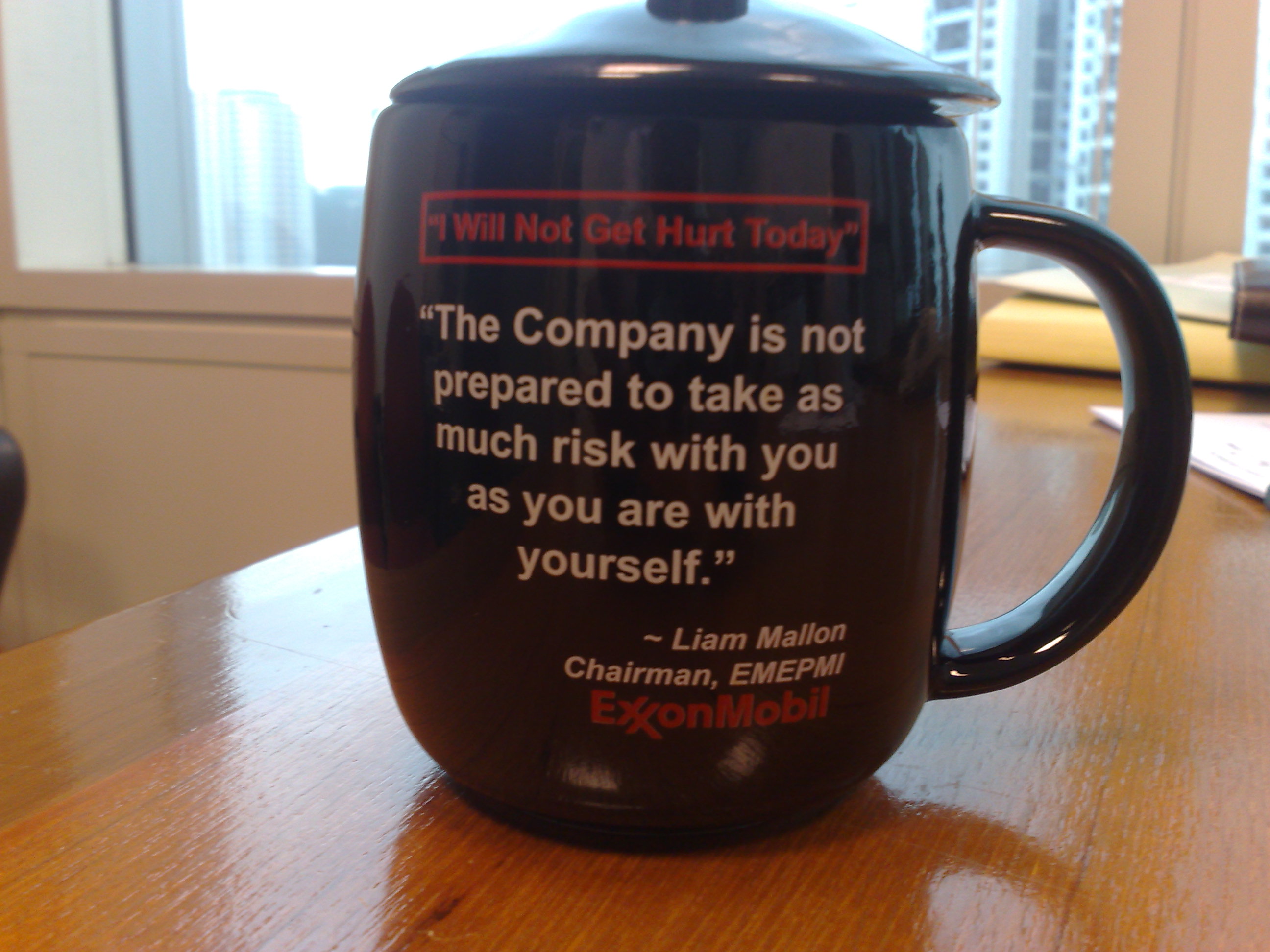
Safety Culture Reminder

Safety Culture Reminder


IChemE 2nd regional safety seminar – Part I

July 19, 2008

I attended the above seminar on Monday, 14th July 2007. Interesting crowd, for once I felt that I was among my brethren of ChemEng.

I took some notes on the first presentation ‘PETRONAS – Enhancing chemical process safety in PETRONAS towards superior performance’ delivered by Kumar Karunakaran of Group Technical Services.

  • Introduction to PETRONAS
  • Introduction to Process Safety
  • Process Safety Enhancements in PETRONAS
  • Implementation approach
  • Implementation of new Roles and Responsibilities
    • Champions
    • Focal Person
    • Process Safety Aspect Custodian
  • The role of Situational Assessments (SA).
  • Problem areas discovered during SAs.
    • Control of Safety Interlocks & Protective System Bypasses.
    • Inconsistent Lock Out Tag Out (LOTO) application when used on non-electrical equipment.
    • Insufficient Pressure Relief Devices (PRD) performance evaluation.
  • Ensuring sustainability through monitoring and measurement
    • Establish Process Safety Community of Practice (CoP)
  • Key success factors.
  • Way forward.
Blue Spotted Stingray

Blue Spotted Stingray


Prof Peng Plenary Lecture

July 17, 2008

I have finally managed to compress the video of this lecture. It’s 120MB, so take a healthy walk while waiting for the download.

You can download the file here.


Perils of Operational Shortcuts

July 16, 2008

I wanted to title this entry ‘Peril of Penelope Pitstop’ but couldn’t find the oil and gas spin. Lost opportunity or what?

Below is the result of a procedural shortcut, which was done without doing a JSA, Take-2, Step Back or any program where you think, analyse and plan before you act:

As if we don’t have enough public transport problems already…

In this case, no one was hurt. I’ve seen the (bloodless) aftermath of another non-oil and gas trained individual who took the same turn, but didn’t see a motorcycle coming up on his right.


Transferable Skills

July 15, 2008

As the price of oil continues upward, us in the industry might get all comfy and fuzzy. The higher the price, the more secure jobs in the oil and gas industry seem to be.

However, I would consider whether a general rise of cost of living would result in a slowdown of the oil and gas industry.If so, then perhaps you should look at the skills that you have, and see whether they can be transferred to another engineering line.

Let’s take me, for example. What skills would I like to strengthen to make me more marketable?

  • Engineering skills: I need to keep my ChemEng knowledge and experience in other fields up to date. If I had a choice, I guess I would need to work on downstream processes, where ChemEng rules. Strippers, catalysts, crackers.
  • The second best way is to work in upstream projects which use a lot of cross-industry processes. Membranes, glycol contactor systems, deprop and debutanisers. Knowing my way around simulation packages (and not getting into a ‘crap in, crap out’ situation) would be a serious advantage.
  • Everyone needs good management skills. So, those project management muscles would need a workout. Try and get into a technical leadership role. The bigger the value of the project under you, the nicer your CV looks.
  • Good networking skills are essential as well. I believe that Malaysia runs on contacts. It’s not what you know, it’s who you know. Isn’t that one of the 7 habits of highly effective people?
  • If all fails, get a hobby which you enjoy, and think you may be able to commercialise. Blogging, professional diving… wait a minute, that’s me.

Anything else? Share your ideas, and give an old geezer like me job security.

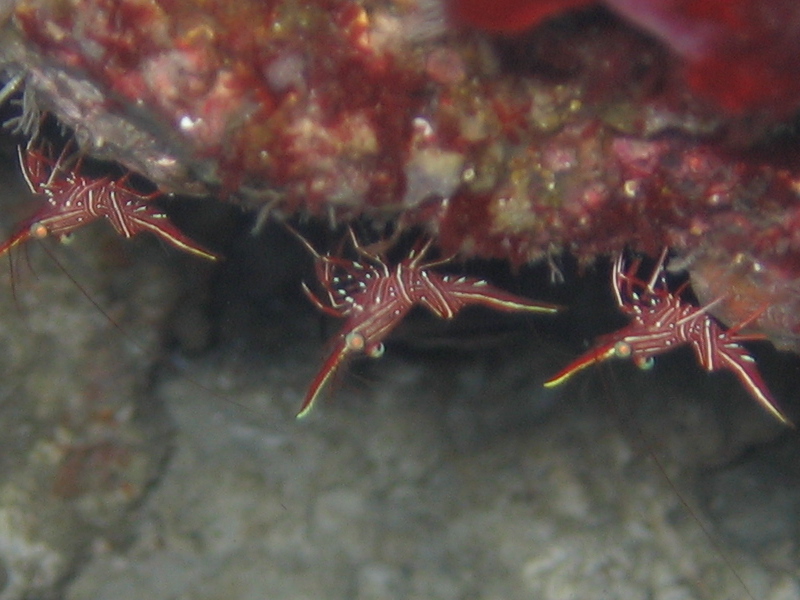
Durban Boxing Shrimp

Durban Boxing Shrimp