Guess where I went for a safety refresher?


Yup, the Miskatonic University Safety Course.
 Leave a Comment » |
  engineering | Tagged: Bangi, NIOSH, safety |
  Permalink
 Posted by Wata
Taken from the Star, dateline 2010-12-15:
Six offshore oil rig workers were injured when a fire broke out at the Bekok C platform operated by Petronas Carigali Sdn Bhd about 200km off Terengganu waters.
They were among 102 people who were carrying out chores at the site when the incident occurred at 12.05am yesterday. All of them were evacuated to another platform by Petronas’ emergency response team.
Petronas Carigali said 108 workers were on the platform when the fire broke out.
…
You can subscribe to an online version of the paper at the Bluehyppo site, follow links to e-browse.
Leave a Comment » | Malaysia, oil and gas | Tagged: fire, Petronas, safety | Permalink
Posted by Wata
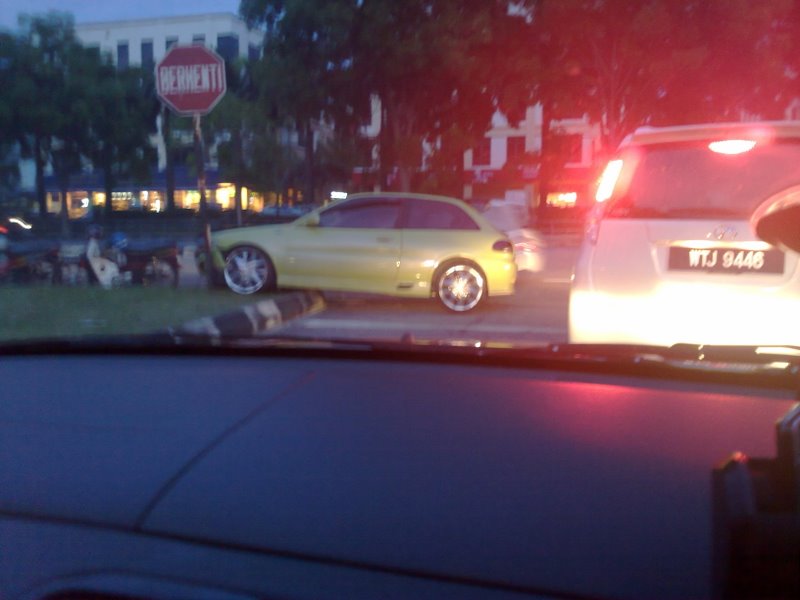
Not something you want your kids to see on the way to school in the morning, or have your kids in.
Have a safe drive home, everyone.
4 Comments | Malaysia | Tagged: car accident, safety | Permalink
Posted by Wata
This is a shout out for the IEM. My Technical Division will hosting the above talk on the 13th March, 2010. It’ll be at 9:30 am (makan-makan at 9:00) at Wisma IEM. That’s right people, as part of the new health drive you are required to walk up 3 flights of stairs to get your 2 CPD points.
It has been a standard industrial practice to carry out hazard analysis for hazardous operations. However, accidents still happen and occasionally, the consequences are alarming. In many cases, the accidents could be prevented if the hazard analysis exercise has been more effectively completed or if the analysis findings (information pertaining the hazards and controls) are communicated to and hence, appreciated by everyone. In response to this, the Bowie technique was invented and is being increasingly adopted in the oil & gas industry. It is simple and can be applied for all types of hazards, such as fire/explosion, environmental pollution, work-related accidents, transportation accidents, security threats, health hazards and many others. It is suitable forother industries as well e.g. construction, fabrication , manufacturing, aviation, shipping etc. The bow-tie technique emphasises on a pragmatic approach to identify not only hazard controls but also measures required to ensure the effectiveness of the identified controls. The overall findings are graphically presented on a bowtie-like skeleton that allows easy understanding and communication.
Ir. Mohd Nazri Mustafa holds a B.E in Civil Engineering from the University of Wollongong, Australia. He has 18 years of experience in dealing with civil and structural engineering issues in oil, gas and, petrochemical plant environment. He has been involved in projects such as Gas Processing Plants GPP 5&6, Propane Dehydrogenation Plant Project, Malaysia LNG, GPP1 Revamp & Rejuvenation and Petronas projects in Sudan.
Fliers for the above and other events may be obtained here. A map to Wisma IEM is presented here. It’s the building identified as ‘Puteri Nursing College.’
Leave a Comment » | engineering, Malaysia, oil and gas | Tagged: safety | Permalink
Posted by Wata
In the industry, a near miss is an incident which lies at the bottom of the safety pyramid.
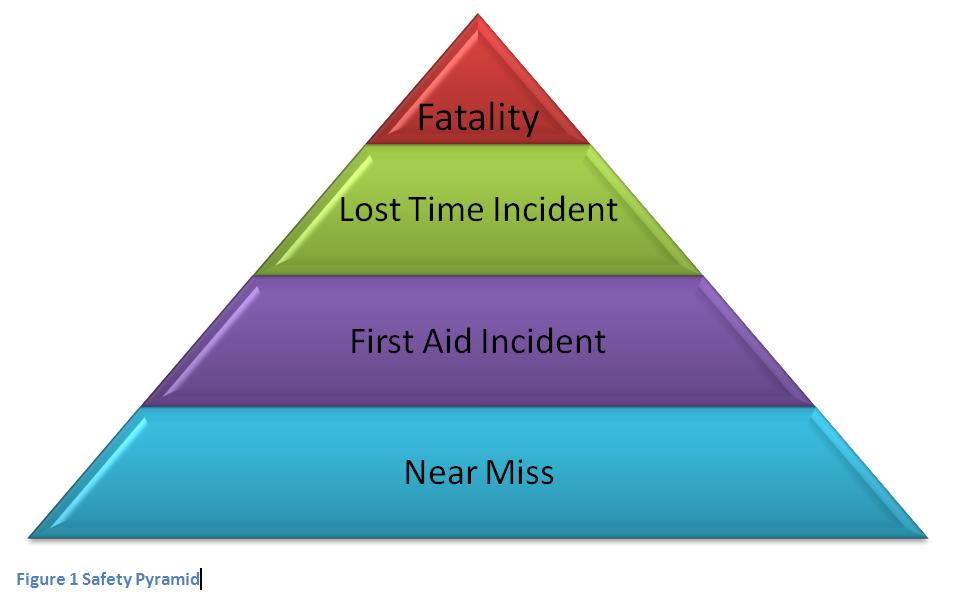
Safety Pyramid
A near miss does not cause any injury, damage or publicity. However, the main reason why it doesn’t do so is usually due to dumb luck. For example:
Here’s a near miss near our offices. In this case, it would be an incident if the power cable snapped, or the power cable was 4 feet longer, or a 10 ft tall person happened to walk by.

Near Miss - Detached Lighting Fixture
3 Comments | Malaysia | Tagged: incident pyramid, near miss, safety, safety pyramid | Permalink
Posted by Wata
No blood and guts are depicted in the following video, only large insurance claims. And with an soundtrack to boot.
Leave a Comment » | Malaysia | Tagged: accident, safety | Permalink
Posted by Wata
In the oil and gas industry, we claim that safety is paramount, more important than profits or cost. An oil and gas engineer will:
In the real world, safety might have a different priority. I took the following photos at Cosmo’s World Theme Park, Berjaya Time Square, Malaysia. Emergency doors are installed, in case a quick emergency exit is required. However, I guess that they have had problems in the past, where ‘customers’ come in through the door and bypass the paying facilities. You gotta wonder, how exactly does this door function?

Locked Emergency Door

Locked Emergency Door
To their credit, if you did have to exit via this door, you find this little item next to it, kinda like the old style adventure games:
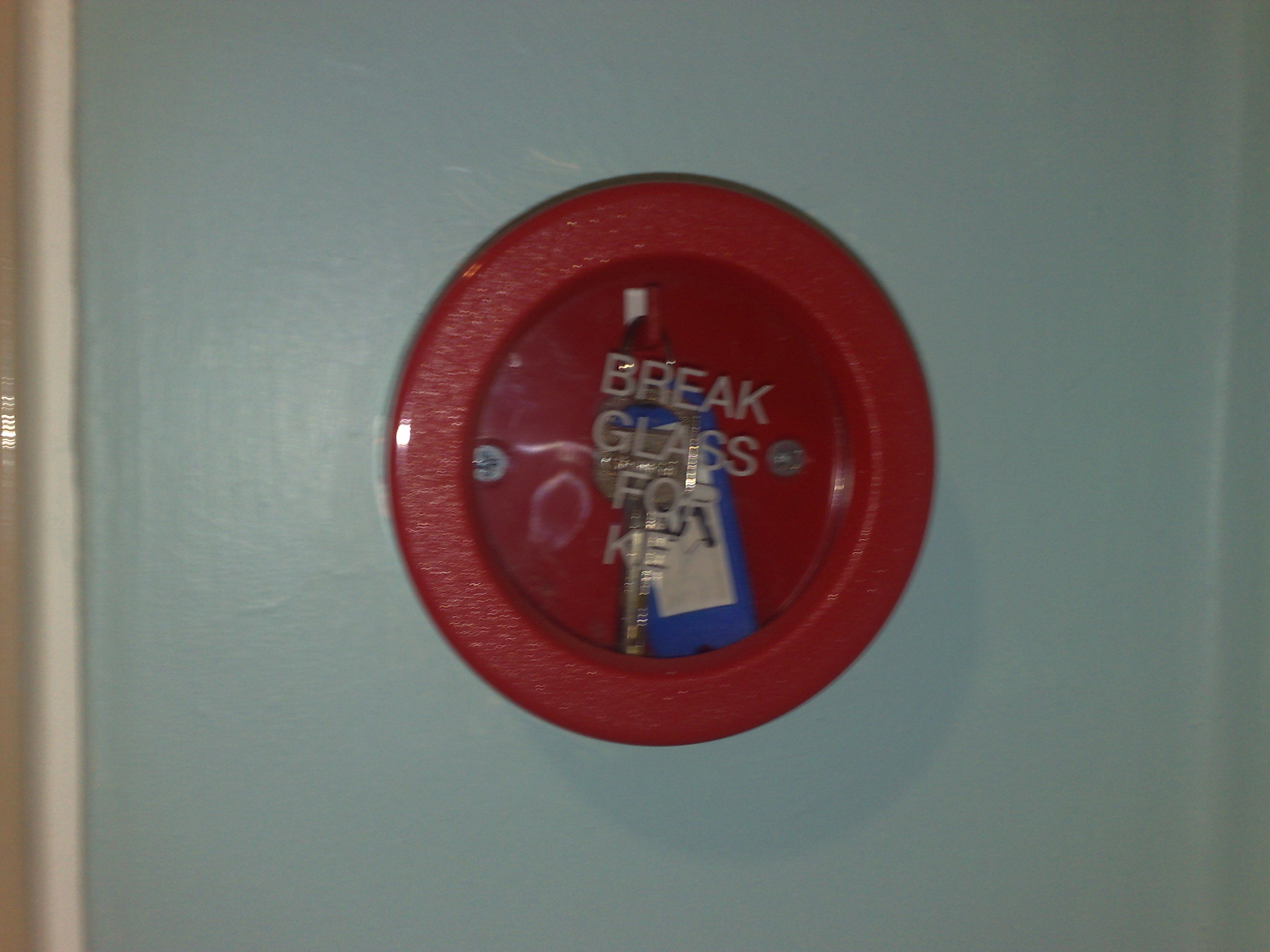
I for one probably won’t find the key in a real emergency. I wonder if their fire drills are witness and approved by Bomba.
1 Comment | engineering, Malaysia, oil and gas | Tagged: Berjaya, Cosmo's World, safety | Permalink
Posted by Wata
Don’t worry, no blood or bodies shown. A reminder how going outside equipment limits might be hazardous to your health.
20081018-crane-failure1
(update 2008-12-15) If the above link doesn’t work, try downloading the file here from ultrafiles.com.my
Leave a Comment » | engineering | Tagged: crane, safety | Permalink
Posted by Wata
Apparently, an offshore operations hand was climbing a ladder to retrieve an item from a height. No one is sure what happened as the person was alone when the incident happened, but he was found on the floor, presumably with the ladder next them.
We don’t really consider ladders as a safety risk no matter how many times it’s drilled into us. Please practice safe use of tools, and follow safety guides and common sense.
3 Comments | Malaysia, oil and gas | Tagged: fatality, ladder, safety | Permalink
Posted by Wata
I attended the above seminar on Monday, 14th July 2007. Interesting crowd, for once I felt that I was among my brethren of ChemEng.
I took some notes on the first presentation ‘PETRONAS – Enhancing chemical process safety in PETRONAS towards superior performance’ delivered by Kumar Karunakaran of Group Technical Services.

Blue Spotted Stingray
2 Comments | engineering, Malaysia, oil and gas | Tagged: GTS, IChemE, Petronas, safety | Permalink
Posted by Wata
 Paypal donations accepted.
 Wata - Malaysian Oil and Gas Engineer